Winter can be a great time of year to enjoy raptor viewing in the picturesque Klamath Basin! Please join KBO board members Amanda Alford and Dick Ashford, who will share their enthusiasm and knowledge during an informative (and fun!) Hawk ID workshop.
On Thursday, February 19th, from 6 – 8:30 PM, we’ll meet in the KBO “Spa” at 2425 Siskiyou Blvd, Ashland, for a presentation on Identifying Wintering Hawks of the Klamath Basin. Then on Saturday, Feb 21st, we will travel to the Klamath Basin for an all-day outing, departing Ashland at 8 AM and returning around 5-ish. To afford everyone the best possible experience, attendance is strictly limited to 11 attendees. This will allow us to carpool in four cars, each driven by members of our KBO Raptor Team.
Please be sure to dress comfortably and bring lunch and liquids. Much of our birding will be from the roadside, and walking will be minimal.
Mindful Birding recognizes that bird watching connects participants with nature through an appreciation of the magnificence of birds. With this recognition, the Klamath Bird Observatory promotes a birding ethic that encourages bird watchers to be mindful of wildlife, safety, and other people, as well as of their own birding experience. With such consciousness, we believe that birders will carry a Mindful Birding ethic from the field into their everyday lives, becoming even stronger messengers for and supporters of bird and habitat conservation.
The birds’ welfare is the highest priority, so please:
Bird quietly, walk slowly, drive cautiously
Respect the birds’ territory, do not approach too closely
Be extra cautious when in the vicinity of nests
Refrain from using audio playback
Do not imitate Northern Pygmy-Owl calls
Do not harass birds by flushing, shining spotlights, or pointing lasers
Refrain from using flash when photographing birds
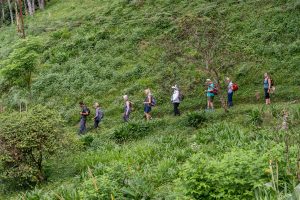
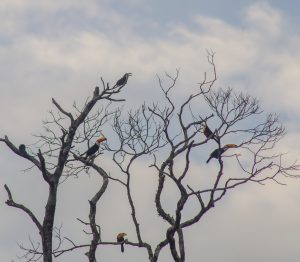
A group staying on a path in Brazil.
Preservation of and access to habitat is important, so please:
Do not damage habitat (breaking branches, trampling vegetation)
Stay on established paths and roads
Respect private property; do not enter without express permission
Follow the rules & regulations of public areas
Avoid aiming optics at people, residences, and businesses
We’re all in this together, so please:
Be courteous to others in your group; your actions affect their birding experience
Remember that the group leader is responsible for the behavior of the group
As you bird, we encourage you to be mindful of your impacts on birds and other people, to be mindful of safety, and to be mindful of your own birding experience.
Thank you, and thank you for supporting bird conservation. The birds need it, and deserve it!
Is your New Year’s resolution to learn more about birds and deepen your support for bird conservation? The Klamath Bird Observatory has you covered with three fantastic events to kick off the year.
Raptors are magnificent—and often challenging—to identify. Join expert Dick Ashford for an evening presentation on Wednesday, January 14th, from 6:00–8:30 PM, where he’ll share tips and tricks for recognizing hawks in the field. Then put your new skills into practice during a guided field trip to the Klamath Basin on Saturday, January 17th. Winter in the Basin is a spectacular time for raptor diversity. Register here.
Looking to make a bigger impact on bird conservation? Join us for an evening of food, friends, and inspiration on Saturday, January 17th, from 5:00–8:00 PM. We’ll introduce our new Travel with Purpose program and share details about our upcoming 2026 trips to Bear Divide (May 6th – May 9th, 2025) and Brazil (September 3–12, 2026). Meet trip leaders, connect with past participants, and learn how meaningful travel can support conservation. This event is free—please register here.
Some feelings about our connection to nature are hard to capture in words alone. Art can help us express them in new and powerful ways. On February 8th, from 4:00–6:00 PM, join KBO and local artist Gatore at Luna Café for a creative, community-centered event. Explore the State of the Birds, then help us transform old reports into beautiful, repurposed works of art. This family-friendly gathering is a wonderful way to connect, create, and reflect. Register here.
Cover photo Northern Harrier taken by Frank Lospalluto
Saturday, January 17th | 5:00–8:00 PM | In-Person Gathering in Ashland
On Saturday, January 17th, from 5:00 to 8:00 PM, an in-person event hosted at the home of a KBO supporter, designed to bring our community together for an evening of stories, photos, and behind-the-scenes insights from our past and upcoming conservation-focused trips to Brazil and Bear Divide. Light dinner and drinks will be served.
Whether you’ve traveled with us before, are considering joining a future expedition, or want to learn more about how international birding can support meaningful science and conservation, this gathering is for you.
Registration is free, but required. Register below.
What to Expect
Stories from the Field
Hear firsthand accounts from travelers and KBO staff who have explored Brazil’s rich biodiversity while contributing to long-term bird monitoring and conservation partnerships.
A look ahead to Brazil 2026
We’ll share details about our next Travel with Purpose adventure to Brazil, including itinerary highlights, conservation goals, and the unique ways participants directly support KBO’s international science and partnership work. From vibrant bird communities to hands-on conservation experiences, this upcoming journey offers an unforgettable opportunity to connect with biodiversity and purpose-driven travel.
We’ll also highlight an exciting domestic opportunity: KBO’s spring migration experience at Bear Divide in Southern California. This remarkable mountain pass funnels thousands of migrating songbirds each morning, creating one of the most spectacular—and scientifically valuable—migration monitoring sites in the western United States. Attendees will get a glimpse into what makes Bear Divide so special, how KBO contributes to ongoing research there, and how you can join us for this unforgettable field experience.
Discover how KBO’s travel program blends immersive birding experiences with hands-on conservation impact. These trips aren’t just vacations; they’re opportunities to support science, strengthen partnerships, and deepen your connection to global bird conservation.
Meet fellow bird enthusiasts, conservation supporters, and curious travelers. This is a chance to ask questions, share your own stories, and learn how you can be part of KBO’s growing network of conservation-minded adventurers.
Why This Event Matters
Travel with Purpose is built on the belief that meaningful travel can strengthen conservation outcomes. When people experience the landscapes, species, and communities we work to protect, they return home inspired and ready to make a difference.
This event is a celebration of that spirit. It’s also an invitation to join us in supporting the next chapter of KBO’s conservation work.
January can be a great time of year to enjoy raptor viewing in the picturesque Klamath Basin! Please join KBO board members Amanda Alford and Dick Ashford, who will share their enthusiasm and knowledge during an informative (and fun!) Hawk ID workshop.
On Wednesday, Jan 14th, from 6 – 8:30 PM, we’ll meet in the KBO “Spa” at 2425 Siskiyou Blvd, Ashland, for a presentation on Identifying Wintering Hawks of the Klamath Basin. Then on Saturday, Jan 17th, we will travel to the Klamath Basin for an all-day outing, departing Ashland at 8 AM and returning around 5-ish. To afford everyone the best possible experience, attendance is strictly limited to 11 attendees. This will allow us to carpool in four cars, each driven by members of our KBO Raptor Team.
Please be sure to dress comfortably and bring lunch and liquids. Much of our birding will be from the roadside, and walking will be minimal.
Early signup is recommended because this outing is so popular (hawks have charisma!). Your seat will be confirmed upon receipt of your non-refundable, tax-deductible contribution of $75 per person. We’re looking forward to seeing you in the Field of Wonder!
We ask that you attend both the classroom session and the field trip. No “outing-only” signups, please. We’ll be looking forward to seeing you in the Field of Wonder!
It’s easy to think of the process of data collection ending once a technician sets down their pencil and returns from the field. But when the goal is to use data to inform bird conservation decisions for years to come, this is only the beginning of the data’s journey.
KBO has been involved in the Avian Knowledge Network (AKN), a partnership of federal and state agencies and non-governmental organizations, since its inception. Currently, the AKN consists of a secure, cloud computing system hosted by Point Blue Conservation Science. The components of this system–including a database and tools for data entry, management, analysis, and decision support—were built specifically for data from structured bird surveys (observations of birds collected with a standardized amount of effort at randomly selected locations), and allow users to efficiently enter, clean, manage, analyze, and share their data. Join us as we take a quick look at how KBO uses the AKN to organize, apply, and archive the data we collect during our Point Count surveys each year.
Pre-Season
KBO’s Point Count Program Lead, Tom McLaren, shows the locations of several point count routes in Arc GIS.
It all starts with an “AKN Protocol.” Like many organizations, KBO uses a point count methodology to survey for birds. An AKN Protocol lays out a specific format that the database expects the data from these surveys to arrive in and keeps track of the meaning of various codes used in the data. This is important because it allows a future biologist to understand how our data were collected when analyzing bird abundance or trends. The protocol for these surveys is also posted on the AKN so other biologists can find and use our specific methodology in their projects.
Another major advantage of the AKN is that it stores the survey locations where point counts take place. Before the field season, KBO’s Point Count Program Lead, Tom McLaren, can quickly download these coordinates from the system and upload them onto GPS units for our technicians to navigate with in the field. The AKN also stores all data records with their geographic coordinate information attached, so future biologists will always know exactly where surveys occurred.
As our seasonal point count technicians arrive in late April, they each register for an AKN account, giving them the ability to enter data later and the database links their name to all the observations they will make in the field.
During the Point Count Season
A point count technician records data during a survey on a paper datasheet.
After a rigorous two weeks of training on our point count methodology, field safety, and local bird identification, technicians head out into the field for several months of data collection. This is no small feat, as they navigate to their assigned sampling locations throughout the Pacific Northwest, set out before dawn each day, and observe, identify, and record all birds seen or heard during surveys. Data is meticulously collected on paper datasheets with pencils and clipboards, allowing for fast notetaking and minimal disturbance to birds nearby.
Throughout the season, technicians carefully review each datasheet and correct any errors made in the field. (It’s easy to accidentally skip a line or record a time wrong when there’s an elusive Yellow-breasted Chat making a sudden appearance on a bare limb, or you can’t quite tell if the song you just heard was a Black-throated Gray Warbler or a Hermit Warbler!) Once each page has been carefully reviewed, technicians begin entering all of the information they collected in the AKN’s data entry page. This webpage is set up to receive data in the same way it was recorded in the field. It includes built-in checks to prevent typos and ensure that all necessary information has been entered for each survey. Technicians look over the data on the screen one final time before giving it the OK to be reviewed by the Project Leader (get ready, Tom! The data are headed your way).
Post-Season
After the season has ended and all data has been entered, Tom checks that data are present in the AKN for every survey that occurred. Any missing information is tracked down,
A point count technician enters data from a datasheet into the AKN data entry page.
and unusual records are investigated—both of which are tedious but important processes until finally the data are ready.
With the push of a button, the clean data are downloaded in a format that is easily summarized and combined with the vegetation data technicians collected in the same locations they searched for birds. A summary of the effort for the season is compiled, analyses are run, and results about the abundance and distribution of breeding birds are provided to the partners stewarding the land where surveys occurred.
Last, Tom ensures that a “sharing level” is set for each survey event. This designates the amount of information from our surveys that is available to other AKN users, with a span of options from keeping the surveys totally restricted to sharing all data openly.
Beyond the KBO Point Count Season
It’s not just KBO that benefits from using the AKN; this powerful tool solves a myriad of problems surrounding the management of bird data, opening the door for informed conservation action at broad scales.
Earlier methods for data entry and management involved typing data into personalized databases that looked very different across organizations. In the AKN, all datasets have the same set of required information – such as the date, time, and location of surveys – and follow rules for how this information can be entered – such as consistent date and time formats. This saves massive amounts of time when pulling together datasets from many different sources, increasing the amount of information available to answer important conservation questions. Users can also download a “smoothed” version of the data, which combines data from multiple protocols into one clean table that can be quickly and efficiently used for an analysis.
Data entered into the AKN is housed for the long run, meaning the database will continue to be accessible and maintained for the foreseeable future. This allows for the buildup of long-term datasets, which are crucial for assessing human impact in the decades to come. Plus, KBO’s data contributes to publicly available AKN tools such as the observation map, phenology tool, and Rapid Avian Information Locator (RAIL) tool. These show where species have been detected on surveys previously, summarize the time of year species have been observed within a selected area, and provide a list of the species that are expected to occur within or near a selected location based on multiple data sources.
By continuing to use the AKN and expand the partnerships involved, KBO is helping support the compilation of structured bird survey data across broad scales, increasing the reach and effectiveness of our (and all our partners’) bird conservation efforts.
We invite you to join the Klamath Bird Observatory and the Mantiqueira Bird Observatory for a once-in-a-lifetime journey into the heart of Brazil’s Atlantic Forest. From September 3–12, 2026, this 10-day adventure offers the perfect blend of birding, culture, and conservation impact.
This is more than a trip; it’s a chance to support science-based conservation beyond borders while experiencing one of the world’s most biodiverse regions.
What You’ll Experience
Rio de Janeiro Botanical Garden & Tijuca National Park Begin in Rio with introductions, a visit to the lush Botanical Garden, and birding in Tijuca National Park, where rewilding projects are bringing nature back to life.
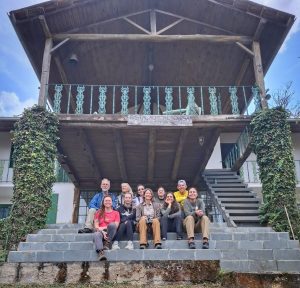
Itatiaia National Park Explore waterfalls, hike scenic trails, and search for monkeys in Brazil’s first national park. Evening conservation talks and films will deepen your connection to the landscapes you walk through.
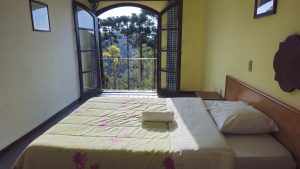
Serrinha do Alambari & Juçara Palm Experience Learn about sustainable management of the Juçara Palm tree, a keystone species in the Atlantic Forest, while staying in the charming Visconde de Mauá Village.
Pedra Selada State Park & Highlands of Itatiaia Hike through restoration areas, join science talks, and witness bird banding demonstrations at Mantiqueira Bird Observatory’s long-term monitoring site.
Institute Alto Montana Discover waterfalls, hike within a private reserve, and enjoy an outdoor farewell dinner with music under the stars.
Why This Trip Matters
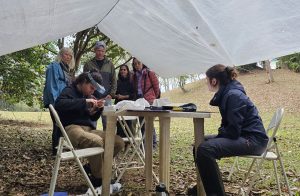
Your participation directly supports the intern exchange program between Klamath Bird Observatory and Mantiqueira Bird Observatory. This program trains young biologists across borders, building conservation capacity where it’s needed most.
Trip Details
Dates: September 3–12, 2026
Cost: $6,000 per person (single occupancy) or $5,500 per person (double occupancy)
Deposit: $3,500 (non-refundable) to reserve your seat
Group size: Limited to 12 participants
Join Us
This trip is designed for those who love birds, nature, and meaningful travel. Expect moderate walking on uneven trails, immersive cultural experiences, and days filled with discovery.
By joining, you’ll not only explore breathtaking landscapes, but you’ll also make a lasting impact on international conservation.
Giving Tuesday is more than a day of generosity; it’s a chance to make a lasting impact. At Klamath Bird Observatory (KBO), we believe that every bird tells a story about the health of our ecosystems. When we protect birds, we protect clean water, resilient forests, and thriving communities.
Your support fuels science in action, powering cutting-edge research that guides conservation across oak woodlands, riparian habitats, and beyond. It also strengthens community engagement, helping us connect people of all ages to the wonder of birds and inspiring the next generation of conservation leaders. And because birds know no borders, your gift has a global impact, from local restoration projects to international partnerships. You ensure that birds have safe places to rest, nest, and thrive.
How You Can Help
You can make a difference this Giving Tuesday by donating to KBO. Every gift, no matter the size, helps protect birds and the habitats we all depend on. Beyond giving, you can amplify your impact by sharing this message with friends and family, inviting them to join the movement. Celebrate the day in your own way: step outside, listen for birdsong, and remember the beauty we’re working together to protect.
Donate Now to KBO and help us soar into tomorrow with strength and purpose
Photo: Yellow-rumped warbler taken by Frank Lospalluto
December can be a great time of year to enjoy raptor viewing in the picturesque Klamath Basin! Please join KBO board members Amanda Alford and Dick Ashford, who will share their enthusiasm and knowledge during an informative (and fun!) Hawk ID workshop.
On December 11th, we’ll enjoy a 6-8:30 PM lecture in the KBO “Spa” at 2425 Siskiyou Blvd, Ashland. To ensure everyone has the best possible experience, attendance is limited to 10. There will be an all-day outing to the Klamath Basin on December 13th. We’ll depart Ashland at 8 AM and return around 5-ish. We will carpool (a must) in 3 vehicles, each with 4 people.
Please be sure to dress comfortably and bring lunch and liquids. Much of our birding will be from the roadside, and walking will be minimal.
Early signup is recommended because this outing is so popular (hawks have charisma!). Your seat will be confirmed upon receipt of your non-refundable, tax-deductible contribution of $75 per person. We’re looking forward to seeing you in the Field Of Wonder!
We ask that you attend the classroom session and the field trip. No “outing-only” signups, please. We’ll be looking forward to seeing you in the Field Of Wonder!
Jocelynn Marriott is a biologist dedicated to bird conservation through collaborative science and data-driven solutions. She currently supports the Department of Defense Avian Knowledge Network (DoD AKN) Program Team, which is composed of several fantastic KBO, Point Blue, and ERDC biologists. She also serves as Technical Coordinator for Partners in Flight (PIF). During the breeding season, Jocelynn is co-lead and subpermittee of a Monitoring Avian Productivity and Survivorship (MAPS) banding station in Los Osos, CA, having trained with the Puget Sound Bird Observatory and the Institute for Bird Populations.
Jocelynn specializes in project and program coordination, leveraging technology whenever possible to uplift team communication, tracking, and organization. She works on projects involving large-scale data collection, data management, and reporting challenges, using tools such as ESRI’s Survey123 Connect and Fieldmaps, as well as the Microsoft Power Platform for automation and custom project management.
She has dual citizenship in Canada and the United States, having been raised in Saskatoon and currently residing in San Luis Obispo, CA. Jocelynn is fluent in French (French Canadian!) and is working on her Spanish. She enjoys travelling, friends, food, and drive-in theatres.



 Hawk Talk and Walk
 Travel with Purpose


 What You’ll Experience
 Why This Trip Matters
 Join Us
 Giving Tuesday is more than a day of generosity; it’s a chance to make a lasting impact. At Klamath Bird Observatory (KBO), we believe that every bird tells a story about the health of our ecosystems. When we protect birds, we protect clean water, resilient forests, and thriving communities.

 Jocelynn Marriott is a biologist dedicated to bird conservation through collaborative science and data-driven solutions. She currently supports the Department of Defense Avian Knowledge Network (DoD AKN) Program Team, which is composed of several fantastic KBO, Point Blue, and ERDC biologists. She also serves as Technical Coordinator for Partners in Flight (PIF). During the breeding season, Jocelynn is co-lead and subpermittee of a Monitoring Avian Productivity and Survivorship (MAPS) banding station in Los Osos, CA, having trained with the Puget Sound Bird Observatory and the Institute for Bird Populations.