
What exactly is a bird’s eye view of the forest?
This post first appeared on Rogue Forest Partners.
 At Klamath Bird Observatory, we frequently tell the story of birds knowing our forests better than we do. Using birds as indicators, we’ve applied our science across the diverse and beautiful Klamath-Siskiyou bioregion to understand the ecological change from a bird’s perspective and used that information to inform conservation planning and restoration design. But what exactly is a bird’s eye view of the forest? When we see a forest, we see trees, shrubs, and grasses; we notice how dense the vegetation grows and how old the trees are. Birds see all of these things too, but individual species also hone in on specific features—snags, downed logs, openness or tightness of a canopy, the size of the patch of forest, or how close it is to a stream. We already use much of what we know about birds and habitats in conservation planning. Our work with the Rogue Forest Partners has provided a recent application for using birds as indicators in planning for the future health of our forests.
With new statistical tools, we can more effectively picture what a bird “sees” and how habitat is distributed across a landscape. Distribution modeling is the process by which a dataset of bird presences and absences from multiple surveys is paired with data about the landscape where the surveys took place. We get data about the landscape from satellite imagery known as Landsat, which measures and reports the reflected light, like a photo, but using more wavelengths, including some invisible to the human eye. “Species-centered” distribution modeling (named for its focus on what the bird sees in the landscape, instead of how people quantify it into vegetation types) uses the information from the surveys and data from the Landsat images to determine what features of the landscape best predict whether a species will be found there.
Unlike simply measuring bird presence directly with a survey, the species-centered models allow researchers to study larger areas and glean more information about where the potential habitat for a species is most likely to occur, even in places where surveys haven’t taken place or where the forest habitat features have not been quantified.
Once the models are created, they have a multitude of applications. A recent study by KBO scientists in partnership with OSU used species-centered distribution models “stacked” on top of one another to understand the effects of habitat fragmentation on bird diversity.
Species-centered distribution models can also help us understand the broad landscape-scale impact of disturbances such as wildfire or restoration treatments such as prescribed thinning and burning.

Since data from Landsat images are available every year, KBO scientists are beginning to test how species-centered distribution models can be applied to assess the effects of restoration treatments on bird habitat over time. For example, we have recently applied distribution models to examine a natural disturbance and recent restoration work in the Rogue Basin. The Quartz Fire, which burned in 2001, was studied using point count data in 2015. Using species distribution models and Landsat from the years before and after the fire, we were able to not only confirm results from our bird survey analysis, but also extract more data points to further our work examining differences among bird communities in low, moderate, and high severity burned areas following the fire.
In the Ashland Watershed, we used the models for 41 songbird species and Landsat imagery from 2004 (before any work took place) and 2019 (after the treatments were completed), we were able to quantify how the bird community changed following those treatments and evaluate whether restoration goals were achieved.
The ability to quantify changes in forest conditions using models, instead of solely monitoring birds directly at a given location, offers efficiencies for expanding the scope and scale of existing bird monitoring efforts to assess ecological change in the places we study. Our ongoing collaboration with Rogue Forest Partners provides an immediate, relevant application for the models, as restorative forest treatments are planned for the next decade to make forests more resilient and communities safe from wildfire. We monitor some of these treatments with bird surveys, but models provide another way to quantify that change across large landscapes that would be financially and logistically challenging to survey directly.
Over time, we can also measure how the forest grows back year after year and assess how bird habitat develops. For example, are the indicator species we expected to see following treatments likely to be there now? Are some species likely to occur in some areas that received a particular ecological thinning prescription more than other areas with a different approach? Does the presence of a species depend on how much of the landscape was treated? By asking these kinds of questions, distribution models provide “snapshots” of the ongoing restoration work that is vitally needed in our forests, help biologists assess habitat change over time, and inform the design and implementation of future restoration treatments.
Contributed by KBO’s Caitlyn Gillespie
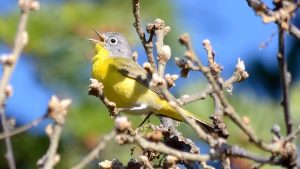
 Klamath Bird Observatory’s Board of Directors invites you to the last two events of KBO’s 2021 FUNdraising series. Our board has developed this new, fun, engaging, and safe approach to FUNdraising, with board members hosting a variety of online and smaller in-person events. We have two events left in December, so please join the FUN!
 KBO relies on private donations to further our mission of advancing bird and habitat conservation through science, education, and partnerships. By attending KBO FUNdraising events, you help to support KBO’s efforts. So, if you love birds, believe in birds as indicators of environmental wellbeing, and want to support KBO’s science-driven bird conservation mission, please register for this FUNdraising event today! We look forward to seeing you at one or more of our Fall Series FUNdraising events.


 This Klamath Bird Observatory FUNdraising workshop and World Migratory Bird Day event will be held via Zoom on December 16, 2021, at 5:30 PM Pacific Standard Time. The workshop is sponsored by Partners in Flight (PIF), with all proceeds from this event supporting the PIF International Bird Conservation Initiative.
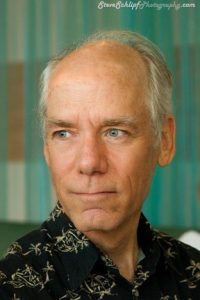 Larry Leichliter is an American animator and director who began his work in animation in 1975 with the made-for-TV film You’re a Good Sport, Charlie Brown. Throughout his career, he has worked on Peanuts animated television films; Larry has also contributed to other successful animated series including Nickelodeon’s ChalkZone and The Mighty B!, as well as Cartoon Network’s Time Squad, Squirrel Boy, The Marvelous Misadventures of Flapjack, Sym-Bionic Titan, and Adventure Time.


 Join us on Saturday, December 11th, for an all-day RAPTOR-FINDING excursion to the picturesque Klamath Basin! Dick Ashford and Amanda Alford will share their enthusiasm of, and knowledge about, “our” wintering raptors during this always-popular field trip. Dick will present a raptor identification class via Zoom prior to the outing on Thursday, December 9th at 6:00 PM.
 Zoom Workshop: Thursday Dec 9th, 2021 at 6:oo PM
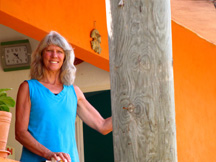 Join us this Thursday evening, November 11th, from 6:30 to 8:00 PM. Shannon Rio, KBO board President, will offer a Zoom presentation focused on acquainting people with birding on the Lower Klamath and Tule Lake National Wildlife refuges. Register now!


 Come join us for our spring afternoon KBO FUNdraiser of live music on Saturday, April 30 (NEW DATE) at
 This presentation and field trip will focus on acquainting people with birding on the Lower Klamath and Tule Lake National Wildlife Refuges. The Zoom presentation will be held on Thursday, November 11th from 6:30 to 8:00 PM, with a follow-up field trip Sunday, November 14th, leaving Ashland at 8:00 AM, and returning by 6:00 PM. KBO supporters will be invited to purchase a limited number of 1-car tickets (for up to four people per car) as a Covid-safe pod of family and close friends (see below for details about field trips and pod cars). Zoom-only registration may also be available. Stay tuned for more information and registration details.

 A popular free outreach publication authored by Klamath Bird Observatory and Lomakatsi Restoration Project that provides guidance for private landowners interested in implementing oak habitat restoration on their land,