It’s easy to think of the process of data collection ending once a technician sets down their pencil and returns from the field. But when the goal is to use data to inform bird conservation decisions for years to come, this is only the beginning of the data’s journey.
KBO has been involved in the Avian Knowledge Network (AKN), a partnership of federal and state agencies and non-governmental organizations, since its inception. Currently, the AKN consists of a secure, cloud computing system hosted by Point Blue Conservation Science. The components of this system–including a database and tools for data entry, management, analysis, and decision support—were built specifically for data from structured bird surveys (observations of birds collected with a standardized amount of effort at randomly selected locations), and allow users to efficiently enter, clean, manage, analyze, and share their data. Join us as we take a quick look at how KBO uses the AKN to organize, apply, and archive t…
We invite you to join the Klamath Bird Observatory and the Mantiqueira Bird Observatory for a once-in-a-lifetime journey into the heart of Brazil’s Atlantic Forest. From September 3–12, 2026, this 10-day adventure offers the perfect blend of birding, culture, and conservation impact.
This is more than a trip; it’s a chance to support science-based conservation beyond borders while experiencing one of the world’s most biodiverse regions.
Three years ago, KBO launched a travel program. Our small-group, conservation-focused journeys are led by expert guides and designed to inspire, educate, and directly support our mission. I have just returned from co-leading a 10-day trip with my colleagues at the Mantiqueira Bird Observatory in the Atlantic Forest of Brazil. The trip itinerary blends birding and nature exploration with cultural experiences, as well as opportunities to observe scientific research and conservation in the field. This trip helps raise funds for the intern exchange program between our two bird observatories, allowing us to advance science while training the next generation of field biologists.
Klamath Bird Observatory and Cal Poly Humboldt Applied Avian Ecology Lab have partnered up to study the response of oak-obligate breeding birds to oak restoration efforts in the Rogue Valley of Oregon, and to understand what drives local population trends. We have selected three species that require oak habitat, Oak Titmouse, White-breasted Nuthatch (Slender-billed subspecies), and Ash-throated Flycatcher, to study in the California black oak and Oregon white oak woodlands at Table Rocks Management Area. We will assess various demographic metrics (nesting density, nest success, and number of fledglings produced) and vegetation structure in relation to restoration in an effort to understand how birds are doing in restored vs. unrestored oak areas. This study will provide essential information on avian responses to restoration and help inform and improve future management efforts. Read more about this important study.
The NEW Conservation Science Stamp set is here! Each set includes the Federal Duck Stamp, featuring the stunning Spectacled eider, and the KBO Conservation Science Stamp. This year the Conservation Science Stamp highlights the White-breasted Nuthatch and the oak habitat they rely on. When you purchase the Conservation Stamp Set, you’re joining birders, hunters, and conservationists who believe in preserving birds and their habitats.
Oregon’s skies just got a little darker—and that’s great news for birds. Oregon Caves National Monument and Preserve has been named the state’s second international dark sky park, a designation that highlights not only its stunning starry skies but also its role in supporting bird conservation. This achievement aligns with a growing understanding of the harmful effects of light pollution on wildlife, especially migratory birds.
Cat ownership has become a defining feature of American households in recent decades. According to the American Pet Products Association (APPA), between 2023 and 2024, approximately 46.5 million U.S. households owned at least one cat, representing about 35.4% of the total 131.43 million households. However, as the popularity of cat ownership soars, so does the impact on local ecosystems—particularly bird populations. By exploring this dynamic and promoting solutions like catios, we can strike a balance between caring for our cats and protecting the natural world.
Join us on February 24th at 6 pm for a presentation on Bear Divide by KBO’s Science Director Dr. Ryan Terrill. Bear Divide is a recently discovered migratory bird concentration point near Los Angeles, CA. It is one of the only places in the western United States where you can see bird migration during daylight hours. Calling Bear Divide a migratory hot spot would be an understatement.
oin us on an adventure to support bird science conservation beyond borders!
Register Now for the III edition of our Fundraising Field Trip: 13-22 August 2025.
If you love tropical birds and hiking in the mountains, listen closely. Over the course of ten days, you will be exploring wildlife and natural landscape, birding with local ornithologists, visiting national and state parks, and getting involved with local conservation efforts to protect birds and habitats at Atlantic Forest. If that wasn’t enough, the cost of this special trip will help fund the intern exchange program between KBO and OAMa and support the continuation of the bird monitoring program on the Mantiqueira Highlands in Southeast Brazil!
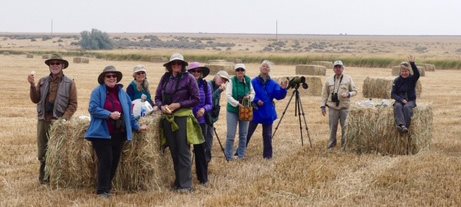
It is estimated that only 3,000 individuals of this declining subspecies remain. The small population size of the Oregon Vesper Sparrow is well-documented, but the causes of its at-risk status are not. As with all migratory birds, population trends may be caused by factors on their breeding grounds, wintering grounds, or migration stopover areas.
Since 2018 Klamath Bird Observatory has been trying to understand the cause of this subspecies’ decline. Getting a snapshot of how many of these birds there are in the Cascade-Siskiyou National Monument – and where they are – is important baseline data. This information will be especially important if the Oregon Vesper Sparrow is listed as federally endangered or threatened – it is currently in review with the U.S. Fish and Wildlife Service for potential listing under the Endangered Species Act. Read todays article to learn about how many KBO found.