Thank you to everyone that attended the world premiere of the short documentary “From the Field – A Study of the Oregon Vesper Sparrow” by Daniel Thiede at Vesper Meadow Restoration Preserve. We are beyond grateful to have partners like Jeanine Moy, Director of the Vesper Meadow Education Program, who provided the space for this event and continues to support our research.
At this event, we celebrated Indigenous Peoples’ Day by acknowledging the land on which we work as traditionally occupied and cared for by the Takelma, Shasta, Modoc, and Latgawa peoples; and heard from Jeanine about how her program is working with local tribes to recenter Tribal members at Vesper Meadow, integrate traditional knowledge into restoration practices, and provide access to their ancestral homelands, First Foods, and other resources. Attendees also heard a short talk from KBO Research Biologist Sarah Rockwell about Oregon Vesper Sparrow research, took a short walk to view the first Motus wildlife tracking station in Oregon and a satellite node, and enjoyed the video premiere.
Oregon Vesper Sparrow (c) Jaime Stephens
We are officially releasing the documentary for public viewing. Join Daniel and KBO on a journey to understand the ecology of the at-risk Oregon Vesper Sparrow and the causes of its decline. Daniel covers the life history of this handsome little brown bird and the field methods and new technology that KBO is employing to study its life cycle year-round. Through beautiful imagery and graphics, he tells the story of KBOs’ continuing research to understand the decline of the Oregon Vesper Sparrow, a subspecies of conservation concern unique to the Pacific Northwest, and look for solutions.
Don’t forget to check out our website and learn more about the Oregon Vesper Sparrow and KBO’s work. The Oregon Wildlife Foundation funded the Vesper Sparrow video. Our ongoing Oregon Vesper Sparrow research has been supported by the BLM’s National Conservation Lands Management Studies Support Program, Carpenter Foundation, Charlotte Martin Foundation, Friends of the Cascade-Siskiyou National Monument, MPG Ranch, Oregon Conservation and Recreation Fund, Oregon Wildlife Foundation, Oregon Zoo’s Future for Wildlife Fund, and the U.S. Fish and Wildlife Service.
Klamath Bird Observatory (KBO) has seen incredible progress in our efforts to advance science-driven conservation. This has come as we are seeing growing public awareness of the environmental crisis unfolding around us. The Three Billion Birds Lost movement (#BringBirdsBack) brings broad attention to recent science suggesting that we have lost one in four birds since 1970. While alarming, science also shows that when we invest in conservation, conservation works for birds and people.
White-breasted Nuthatch (c) Karl Schneck
Over the past decades, much of KBO’s work has focused on Pacific Northwest forests, where nearly half of the associated bird species are in decline. Our oak woodland forests host some of our most at-risk bird species. Over the past 50 years, we have seen dramatic losses in oak and associated prairie habitats. What remains faces many threats, including the interruption of low-severity fire cycles. There is an urgency at this moment, and the time is now to take action to recover forest bird populations while increasing the resilience of western forests, specifically oak woodlands.
“As KBO grows, we must continue adapting our organizational model to meet new opportunities to scale up our science-driven bird conservation efforts. As highlighted in the 2022 State of the Birds, there is an urgent need to address the Three Billion Birds crisis. With nearly half of our western forest bird species in decline, we must act now, and that is exactly what we are doing. New investments in forest restoration efforts through the Bipartisan Infrastructure Law, the America the Beautiful Initiative, the Oregon Watershed Enhancements Board’s Focused Investment Program, and other anticipated funding opportunities present KBO with an unprecedented opportunity. We are poised to help guide these new investments in forest restoration to ensure they pay off in measurable bird conservation outcomes. Jaime Stephens is a respected regional and national conservation leader, and she is the perfect person to take on this Director of Conservation position. In her new position, Jaime will be pioneering a game-changing approach identified by the Partners in Flight Bird Conservation Initiative as a priority next step that must be taken if we are to address the Three Billion Birds crisis. By developing a new conservation delivery program area at KBO, we will be helping to develop a novel model of conservation action.” John Alexander, KBO Executive Director.
To align KBO’s staffing to meet this forest bird conservation need, we are developing a new conservation delivery program area to help us further focus and scale up our efforts to translate science into even more conservation action. This new program area is poised for success because Jaime Stephens, who has been a leader at KBO for over 20 years, will be taking on a new role as KBO’s first Director of Conservation. Jaime has served as KBO’s long-time Science Director for many years, leading our extensive monitoring and research efforts. As the Science Director, Jaime has worked tirelessly to develop the partnerships and deliver our science, helping to grow KBO’s direct involvement in on-the-ground conservation efforts. These efforts have reached a level that warrants the creation of this new position.
As KBO’s Director of Conservation, much of Jaime’s work will focus on the Klamath-Siskiyou Oak Network‘s efforts to implement restoration actions in the oak and prairie habitats of southern Oregon and northern California while also contributing to the broader Pacific Northwest Oak Alliance. Additionally, Jaime will continue working with Rogue Forest Partners and the Northern Blues Forest Collaborative to ensure investments in these large-scale forest efforts pay off for birds and people.
Jaime Stephens, MS, Director of Conservation
“I am incredibly excited to shift my focus here at KBO. This new role will allow me to increase the integration of KBO’s conservation science and range-wide bird conservation objectives into land management actions guided by local and regional partnerships. Funding for several new oak initiatives has elevated the need for this program area at KBO.” Jaime Stephens, KBO Director of Conservation.
As Jaime transitions into this new role, she will continue to work with KBO’s Science Team to answer the most pressing questions to inform efforts to halt the decline of western birds. As KBO continues to elucidate the causes of decline for at-risk bird species, Jaime will ensure we take the next steps to co-produce outcome-oriented conservation efforts that are inclusive of not only conservation decision-makers but also impacted communities and rightsholders. Through her new role as KBO’s Director of Conservation, Jaime will employ this co-production process to help eliminate what is often referred to as the research-to-implementation gap.
We thank all of our supporters and partners for helping KBO to take this next step towards broad scaled conservation action and continue to grow as a regional, national, and international leader in bird conservation.
Large mature oak tree with spreading limbs (c) Frank Lospalluto
This press release was originally posted by the Oregon Department of Fish and Wildlife (ODFW) HERE.
ODFW, in partnership with the Klamath Siskiyou Oak Network (KSON), received a $2.78 million federal grant from America the Beautiful Challenge program to conduct oak-prairie habitat restoration in the Upper Rogue watershed.
The funding comes from multiple federal agencies and complements match funding from private donations designated for landscape-scale conservation work directed by the state, tribal, nonprofit, and working-lands partners.
“Building on a decade of collaboration, restoration, and a body of science to inform future actions, we are excited to embark on a project of this scale to protect oak for the benefit of people and wildlife,” said Jaime Stephens, Klamath Bird Observatory Science Director, and KSON Coordinator.
Large oak with spreading limbs (c) Bob Altman
The federal grant will help support two ongoing oak restoration initiatives. The Upper Rogue Oak Initiative builds on a recently awarded $7 million investment from the Oregon Watershed Enhancement Board and $3 million matching funds to KSON’s Little Butte Oak Initiative. Support for both initiatives will create landscape resiliency and wildlife connectivity.
The additional investment expands the initiatives’ geographic reach by restoring 800 acres of oak habitat using prescribed fire, ecological thinning to reduce conifer encroachment, noxious weed reduction, and native understory planting.
For time immemorial, oak ecosystems have provided and continue to provide culturally important plants and other resources that sustain indigenous communities. Over the past century, oak-prairie ecosystems have experienced dramatic loss and degradation.
Through Lomakatsi’s Tribal Partnerships Program and the Inter-Tribal Ecosystem Restoration Partnership, tribes and inter-tribal crew members have supported oak habitat restoration as part of KSON and related initiatives for over two decades. A central part of the grant application focuses on engaging with tribes and tribal communities with ancestral ties to the project area to ensure indigenous voices and the incorporation of culturally beneficial resources and subsistence “first foods” into restoration planning.
KSON partners anticipate equally distributing restoration actions across both private and BLM-administered public lands. Restoration treatments on BLM-administered lands are planned under various environmental analyses, including the Integrated Vegetation Management for Resilient Lands (IVM-RL) Environmental Assessment (EA).
“The BLM designed and developed the assessment with a desire to help streamline collaborative projects and increase competitiveness,” said BLM Medford District Manager Elizabeth Burghard. “We recognize the importance of an all lands, all hands approach to ecosystem restoration and fuels reduction projects.”
White-breasted Nuthatch (c) Karl Schneck
It is estimated that less than 25 percent of historic prairie-oak habitat remains across Oregon. The most significant percentage of remaining oak habitat in the Pacific Northwest is in southwest Oregon. Both land conversion and human-induced ecosystem process alterations threaten these remaining habitats. Oak habitat loss is a significant threat to wildlife species in Oregon, including Oak Titmouse, White-breasted Nuthatch, Black-throated Gray Warbler, and game animals such as deer and elk.
ODFW’s Habitat Division, created by the Legislature in 2021, worked with the Pacific Birds Habitat Joint Venture, Oregon Wildlife Foundation, and Klamath Bird Observatory to secure funding through America the Beautiful Challenge and will work with KSON starting in 2023 to implement restoration work.
Additional grant funds from the America the Beautiful Challenge were also awarded to projects in Oregon:
The Nez Perce Tribe was awarded $5 million for restoring sockeye salmon habitat connectivity at the Wallowa Lake dam.
Confederated Tribes of Coos, Lower Umpqua, and Siuslaw will receive $3.5 million for tidal wetland restoration for Oregon Coast Coho Salmon habitat restoration in the Siuslaw River estuary.
North Fork John Day Watershed Council was awarded $509,000 for the mine tailing and water quality restoration of Bull Run Creek in the Wallowa-Whitman National Forest.
Curry County Soil and Water Conservation District was awarded $700,000 for treating invasive gorse and English ivy to protect the Siskiyou National Forest.
For more information about how ODFW connects conservation partners and communities with once-in-a-lifetime federal infrastructure funds and other opportunities, visit ODFW’s Investing in Oregon (IIJA) webpage.
The Klamath Bird Observatory (KBO) is a non-profit organization that advances bird and habitat conservation through science, education, and partnerships. Working in the Pacific Northwest and throughout the ranges of migratory birds, KBO emphasizes high-caliber science and the role of birds as indicators to inform and improve natural resource management. KBO also nurtures an environmental ethic through community outreach and education.
We now offer a Zoom option for the Holiday FUNdraiser — Contemplative Photography by Kirk Gooding. This presentation celebrates the power of photography. Kirk selected his favorite nature photos and created this inspirational series set to music. After a brief introduction, we ask you to sit back and enjoy the sights and sounds created in this stunning presentation.
This event takes place on December 11th from 5 pm – 8 pm and Zoom 6 pm – 7 pm.
This holiday event will be held in a home in Ashland. Appetizers and beverages will be provided.
Event Itinerary
5-6 PM Arrive and enjoy pre-show food and drink.
6-7 PM Introduction, presentation, question and answer, and conversation. The Zoom portion of the event will start at this time.
7-8 PM A chance for more conversing and enjoying delicious hors d’oeuvres. Cards will be for sale that features photos from the presentation. Great for the holidays
Suggested tax-deductible donation: $100 in person, $50 via Zoom
Join the Giving Tuesday movement. It is the biggest day of the year for generosity. By giving to Klamath Bird Observatory, you are helping to support long-term monitoring that provides information about changes in bird populations, in-depth theoretical research that advances our understanding of bird distribution and movements, and applied ecology that addresses natural resource management challenges. We ask that you help us with our continued efforts to protect birds, putting birds and KBO’s science at the forefront of conservation decision-making and action. PLEASE CLICK HERE TO MAKE AN END-OF-YEAR DONATION NOW!
Nature photography can be deeply soul-soothing and meditative. It can be educational as it gives details about the appearance or behavior of a bird, and it can result in the protection of birds and landscapes. William Finley was a conservation photographer who presented to Teddy Roosevelt photos showing the mass slaughter of herons and egrets, prompting Roosevelt to set aside land as refuges for birds.
This presentation celebrates the power of photography. Kirk Gooding selected his favorite nature photos and created this inspirational series set to music. After a brief introduction, we ask you to sit back and enjoy the sights and sounds created in this stunning presentation.
This holiday event will be held in a home in Ashland. Appetizers and beverages will be provided.
5-6 PM Arrive and enjoy pre-show food and drink.
6-7 PM Introduction, presentation, question and answer, and conversation.
7-8 PM A chance for more conversing and enjoying delicious hors d’oeuvres. Cards will be for sale that features photos from the presentation. Great for the holidays
Suggested tax-deductible donation: $100 in person, $50 via Zoom
Register below
This event is hosted by KBO board members Shannon Rio and Amanda Alford. The photographer, Kirk Gooding, is married to Shannon Rio.
Klamath Bird Observatory follows CDC guidelines. KBO events are being offered with COVID-19 safety as KBO’s primary concern. Proof of vaccination will be required for all in-person participants. All individuals attending an event must also fill out the Waiver of Liability form that will be emailed to you once you register for the event. Paper copies will be available at the event. Please do not attend the event if you are experiencing COVID-19 symptoms. Masks are not required but wear based on comfortability.
*Please fill out the form for each attendee
KBO relies on private donations to further our mission of advancing bird and habitat conservation through science, education, and partnerships. By attending KBO FUNdraising events, you help support KBO’s efforts. So, if you love birds, believe in birds as indicators of environmental well-being, and want to support KBO’s science-driven bird conservation mission, please register for this FUNdraising event today!
It is still 2022, but we are planning for 2023! In April, KBO will be traveling to Brazil to spend time with Mantiqueira Bird Observatory (OAMa) and their fantastic team, Luiza and Pedro. Join us for a 10-day trip exploring the beauty of the Brazilian cloud forests, seeing exotic birds, discussing bird conservation with scientists from Brazil and KBO, bird banding in action, and eating delicious food. By attending this trip, you are donating to the intern exchange program between KBO and OAMa. Your donation helps cover the cost of travel, visa fees, stipend, and much more for an intern.
The trip is taking place April 12th – 20th. The cost is $5000 per person; this includes hotels, food (breakfast, lunch, dinner), and transportation. The only thing not included is airfare from the US to Brazil. A $2500 deposit is required to reserve your seat. Of the $5000 fee, $2500 is a taxable donation.
You can view an itinerary of the trip HERE. Subject to change.
Luiza will be hosting a presentation on November 20th at 5 pm to showcase all the amazing this we will see and do in Brazil and about OAMa. She will also be available to answer any questions about the trip. This in-person hybrid presentation will be held at the KBO office in Ashland and online via Zoom. To attend the presentation, please fill out the form below.
Klamath Bird Observatory follows CDC guidelines. KBO events are being offered with COVID-19 safety as KBO’s primary concern. Proof of vaccination will be required for all in-person participants. All individuals attending an event must also fill out the Waiver of Liability form that will be emailed to you once you register for the event. Paper copies will be available at the event. Please do not attend the event if you are experiencing COVID-19 symptoms. Masks are not required but wear based on comfortability.
Published by 33 leading science and conservation organizations and agencies, including Klamath Bird Observatory (KBO), the 2022 U.S. State of the Birds report presents state-of-the-art scientific results that show alarming declines in western forest birds, combined with stories about important partnerships that offer hopeful opportunities for restoring our bird populations. To help us tell the story about how sustained forest management investments in the Klamath Siskiyou Bioregion may benefit birds, we invited Executive Director Terry Fairbanks from the Southern Oregon Forest Restoration Collaborative (SOFRC) to provide a testimonial. KBO is bringing multiple voices to the table to coalesce around a forest conservation movement to ensure investment in forest restoration benefits birds and people.
KBO is collaborating with SOFRC to use birds as indicators of forest restoration progress. The 2022 State of the Birds Report shows where our Western Forest birds are declining, highlighting the Rogue Basin as a priority area of concern. As we restore our forest from years of fire suppression using birds to guide conservation action and evaluate restoration success, we are telling a complete ecosystem story. KBO Executive Director John Alexander, a contributor to the Report, gave a live interview with Jefferson Exchange host Geoffrey Riley, discussing this story. If you missed this interview, you can listen to it HERE.
To read the report, CLICK HERE or learn more about what the report tells us about birds in the Klamath Siskiyou Bioregion HERE.
Support ALL bird conservation by purchasing the Conservation Science Stamp set. Proceeds from this year’s Science Stamp support our international bird banding program. Bird banding data tell us if birds successfully breed in an area—indicating a healthy habitat. It also tells us if birds are surviving migration, information that informs international conservation efforts. Our partnerships with the University of Guadalajara and San Pancho Bird Observatory in Mexico help us study the full lifecycle of migratory birds, including this warbler. KBO’s bird banding internship program also helps us train the next generation of bird conservation leaders.
January can be a great time to enjoy raptor viewing in the picturesque Klamath Basin! Please join longtime KBO board member Dick Ashford, who will share his enthusiasm and knowledge during an informative (and fun!) Hawk ID workshop.
On Jan 5th, a classroom lecture will be held from 6-8:30 PM in the KBO “Spa” at 2425 Siskiyou Blvd, Ashland. Then, enjoy a day-long outing to the Klamath Basin on Jan 7th. We’ll depart Ashland at 8 AM and return around 5-ish. To afford everyone the best possible experience, attendance is limited. We will carpool (a must!) in 4 vehicles of 4 people each.
Register using the form below
Please be sure to dress comfortably and bring lunch and liquids. Most of our birding will be from the roadside, and walking will be minimal. Everyone will be required to submit proof of vaccination. I appreciate your help in keeping us all safe in these challenging times!
Because this outing is so popular (Hawks have charisma!), early signup is recommended. Your seat will be confirmed upon receipt of your non-refundable, tax-deductible contribution of $75 per person. We’re looking forward to seeing you in the Field Of Wonder! Due to the workshop’s popularity, we ask that you attend both sessions. No “outing-only” signups. We’ll be looking forward to seeing you in the Field Of Wonder!
Cover photo Ferruginous Hawk by Frank Lospalluto
Klamath Bird Observatory follows CDC guidelines. KBO events are being offered with COVID-19 safety as KBO’s primary concern. Proof of vaccination will be required for all in-person participants. All individuals attending an event must also fill out the Waiver of Liability form that will be emailed to you once you register for the event. Paper copies will be available at the event. Please do not attend the event if you are experiencing COVID-19 symptoms. Masks are not required but wear based on comfortability.
Instructor & Trip Leader
Dick Ashford has served on the KBO Board since 2005, with two terms as Board President (2007-2009, 2010-2013). He also served on the board of the American Birding Association from 2007-2013 (Chair 2009-2010). A continuing student of birds and birding, Dick especially enjoys leading hawk-watching trips to Oregon’s Klamath Basin. He has taught a Hawk ID Workshop at the annual Winter Wings Festival in Klamath Falls for over 10 years.


 “As KBO grows, we must continue adapting our organizational model to meet new opportunities to scale up our science-driven bird conservation efforts. As highlighted in the


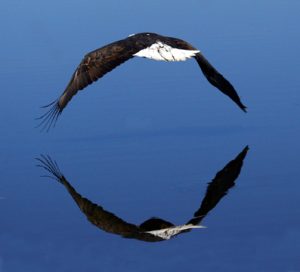 We now offer a Zoom option for the Holiday FUNdraiser — Contemplative Photography by Kirk Gooding. This presentation celebrates the power of photography. Kirk selected his favorite nature photos and created this inspirational series set to music. After a brief introduction, we ask you to sit back and enjoy the sights and sounds created in this stunning presentation.
 Join the Giving Tuesday movement. It is the biggest day of the year for generosity. By giving to Klamath Bird Observatory, you are helping to support long-term monitoring that provides information about changes in bird populations, in-depth theoretical research that advances our understanding of bird distribution and movements, and applied ecology that addresses natural resource management challenges. We ask that you help us with our continued efforts to protect birds, putting birds and KBO’s science at the forefront of conservation decision-making and action.

 KBO relies on private donations to further our mission of advancing bird and habitat conservation through science, education, and partnerships. By attending KBO FUNdraising events, you help support KBO’s efforts. So, if you love birds, believe in birds as indicators of environmental well-being, and want to support KBO’s science-driven bird conservation mission, please register for this FUNdraising event today!

 Support ALL bird conservation by purchasing the

 Dick Ashford has served on the KBO Board since 2005, with two terms as Board President (2007-2009, 2010-2013). He also served on the board of the American Birding Association from 2007-2013 (Chair 2009-2010). A continuing student of birds and birding, Dick especially enjoys leading hawk-watching trips to Oregon’s Klamath Basin. He has taught a Hawk ID Workshop at the annual Winter Wings Festival in Klamath Falls for over 10 years.