Author: KBO

A New “eBird Festival” Elevates Bird Conservation in the Pacific Northwest

Klamath Bird Observatory’s first-ever Mountain Bird Festival was featured as a news story on the homepage of the popular eBird program. The article draws attention to birding festivals known as “eBird Festivals” because they promote the use of eBird and ensure birdwatching field trip checklists are entered into the eBird database as a matter of protocol. The upcoming, conservation-focused Mountain Bird Festival is an “eBird Festival” that promotes eBird to increase the availability of citizen science data on bird distributions and abundances in southern Oregon and northern California. These data will increase understanding and stewardship of the region for the benefit of people and wildlife.

Bird Banding Workshop: Aug 4-8

banding_juncoTarget Audience: This workshop is designed for undergraduates, graduate students, bird observatory volunteers, naturalists, and others interested in learning more about bird monitoring and conservation science. The course is particularly suitable for those interested in pursuing careers in ornithology or volunteering at bird banding stations.  No previous experience necessary!

Dates: August 4-8, 2014

Cost: $1,000

Klamath Bird Observatory is offering a Bird Banding Banding Workshop at its Upper Klamath Lake Field Station on August 4-8, 2014.  This is a North American Banding Council (NABC) sanctioned training event.  The workshop content will be NABC-based and all instructors will be NABC-certified Bander Trainers.  Upon successful completion, participants with be presented with a NABC Training Certificate.

The 4-day workshop will provide an excellent opportunity for individuals to experience an active bird monitoring station and learn the skills needed for its operation.  Participants will receive training in bird safety, mist net use and maintenance, data collection, bird identification, bird banding, and sexing and ageing techniques – through both hands-on instruction and numerous seminars.  The workshop program has been developed for people with little or no bird handling and banding experience, although those with intermediate skills will benefit from the workshop by building upon their existing skills and knowledge.

This is an introductory course and participants will be exposed to the fundamental skills and knowledge that serve as the foundation for becoming a skilled bird bander.  Participants should not expect to emerge from this workshop as qualified bird banders.  This course provides excellent preparation for those interested in pursuing the NABC Bander certification.

The registration fee is $1,000 per person.  Registration includes all meals beginning with dinner August 4 and ending with lunch August 8.  Space is available for tent camping at the Upper Klamath Lake Field Station.  There is lodging nearby at the Rocky Point Resort and the Lake of the Woods Resort (both with cabins as well as RV and tent camping), and the Crystalwood Lodge.

For More Information and To Register: Please contact Bob Frey at bif<AT>klamathbird.org. Registration deadline July 17, 2014.

Festival Keynotes to Educate, Entertain

Many of the reasons to attend the inaugural Mountain Bird Festival in Ashland, Oregon have feathers: White-headed Woodpecker, Williamson’s Sapsucker, Dusky Flycatcher, and Hermit Warbler, to name a few. But there are other reasons to attend and perhaps the most compelling of these are the two keynote presentations to be given at ScienceWorks Hands-On Museum from 700-800pm on the evening of May 31st by Pepper Trail and Barry Kraft.

Below are the keynote descriptions and presenter biographies. Visit the Mountain Bird Festival website to browse available birdwatching field trips and then register for this exciting community conservation event, a recent recipient of a Conservation Award. Sign up soon before field trips fill, and we hope to see you in Ashland in late May!

The Mountains of Everywhere by Pepper Trail

Ashland, Oregon, tucked into a fold between the Cascade and Siskiyou Mountains, may seem to be in the middle of nowhere. But here in single day, you can walk through sagebrush and spruce forest, spot Great Gray Owls and Blue-gray Gnatcatchers, and attend a science seminar and a Shakespeare play. Our mountains are one of the great biological crossroads of North America, and our little town is a hotbed of science, conservation, and the arts whose influence extends to the corridors of power in Washington and the bright lights of Broadway. Welcome to Ashland. Welcome to everywhere.

pepper_trailPepper Trail received his Ph.D. from Cornell University for his field studies of the spectacular Guianan Cock-of-the-Rock in Suriname.  He is the author of numerous scientific papers and popular articles in journals ranging from Science and Conservation Biology to National Geographic and Ranger Rick.  He has lived in Ashland since 1994, where he is the ornithologist at the U.S. National Fish and Wildlife Forensics Laboratory.  In this position, he is responsible for identification of all feathers and bird remains seized in investigations of endangered species smuggling and other wildlife crimes.  An active member of the regional conservation community, he was heavily involved in the efforts that led to the establishment of the Cascade-Siskiyou National Monument.  His expertise, enthusiasm, and sense of humor make him a sought-after speaker and tour guide, and he has led birding trips to all seven continents.

Shakespeare and the Corvids by Barry Kraft

In 1592, the first critical notice of Shakespeare was published in London — an unflattering description of him as “an upstart crow”. Critical intent aside, the comparison of the poet/playwright to the crow and raven family of feathered geniuses was apt – both he and they, noted for outstanding intelligence and adaptability, are survivors above all. Barry Kraft’s keynote presentation will explore the affinities Shakespeare has with the corvids, and reference the many members of this family of birds that have flown their ways into his poems and plays.
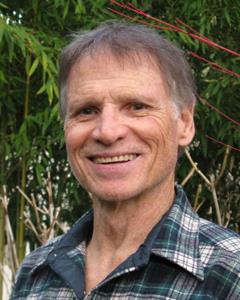
barry_kraftBarry Kraft has acted in all 38 of Shakespeare’s plays (more than 100 roles in 86 full productions), including 20 seasons at the Oregon Shakespeare Festival. He has had seasons with the Colorado Shakespeare Festival, Old Globe (San Diego), The Empty Space & A Contemporary Theatre (both in Seattle), San Jose Rep, Berkeley Shakespeare Festival, ACT (San Francisco), Marin Shakespeare Company, and Utah Shakespearean Festival. For the Eugene Symphony, he was the narrator for Leonard Bernstein’s Kaddish Symphony. He has written After-Dinner Shakespeare and Shakespeare Insult Generator. He has recorded several books on tape for Blackstone Audio, including Ovid’s Metamorphoses. He is also a dramaturg, educator, an avid chess and Go player, and poetry lover. Barry has been an enthusiastic birder from boyhood, and in his teens had a pet barn owl, a red-tail hawk, a kestrel, and a raven. (Yes, illegal at the time — but he didn’t know it!)

Visit the Mountain Bird Festival website to register for this fun and unique conservation festival!

Birding Festival Receives Conservation Award

calliope

Klamath Bird Observatory receives award in recognition of the conservation significance of its Mountain Bird Festival being held in Ashland, Oregon, May 30 through June 1, 2014.  This inaugural Mountain Bird Festival combines a celebration of the Klamath-Siskiyou Region’s spectacular mountain birds with the stewardship ethic needed to ensure thriving landscapes for humans and wildlife.

An anonymous donor granted this award recognizing the festival’s central theme – citizens elevating conservation.  Every Mountain Bird Festival attendee advances bird conservation in multiple ways; they contribute to habitat protection, they participate as citizen scientists, and they support scientific programs aimed at achieving sustainable natural resources management.  “Receiving this award as we prepare to host our first conservation-focused festival adds to our momentum and gives us encouragement that we’re on the right trajectory,” said John Alexander, Klamath Bird Observatory’s Executive Director.

The Mountain Bird Festival’s conservation impacts are far-reaching.  First, each festival attendee receives a Federal Migratory Bird Hunting and Conservation Stamp (a.k.a. the Duck Stamp) purchased with a portion of their registration fee. The Federal Duck Stamp Program is considered one of the most successful conservation programs ever; proceeds from stamp sales are used to purchase or lease wetland habitat for protection within the National Wildlife Refuge System.  More than 6 million acres of strategic wetland habitat have been preserved through this program over the last 80 years.

Second, all bird sightings made during Mountain Bird Festival field trips will be entered into eBird, a real-time, online checklist program that is the fastest growing biological database in the world.  The birding community – simply by uploading bird abundance and distribution data into this program – is contributing to an unprecedented understanding of the dynamic health of the natural world; such information allows scientists to identify conservation priorities and better use limited conservation funds.  eBird Festivals, such as the Mountain Bird Festival, are accelerating this valuable citizen science trend.

Third, festival attendees also receive a new and attractive Mountain Bird Conservation Science Stamp, modeled after the Duck Stamp and designed by local artist Gary Bloomfield.  Each festival attendee purchases this stamp though their registration fee and proceeds support Klamath Bird Observatory’s scientific programs that inform management for healthy lands, airs, and waters in the Klamath-Siskiyou Region of southern Oregon and northern California.

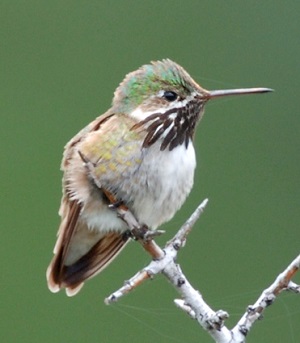
The Mountain Bird Festival is a unique community conservation event that celebrates the globally outstanding Klamath Siskiyou Region, recognized for its abundance of different habitats and species.  The festival offers two days of field trips that will search for mountain bird specialties, such as White-headed Woodpecker, Mountain Quail, Calliope Hummingbird, and Great Gray Owl.  The festival also features a fine art auction, live music, local foods and beverages, cocktail parties, and stimulating evening presentations.

Klamath Bird Observatory is hosting the 2014 Mountain Bird Festival in partnership with the City of Ashland, the Ashland Chamber of Commerce, ScienceWorks Hands-On Museum, and many other organizations.

Click here to visit the Mountain Bird Festival website to learn about festival events and to register.

Click here to access a PDF of this Press Release.

After the Flood

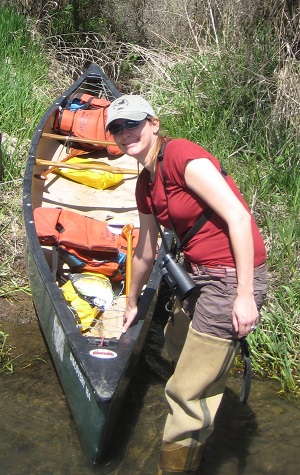
jaime_goldraydamBetween 2008 and 2010, three dams were removed from the main stem of the Rogue River in southwestern Oregon, opening up 157 miles of free-flowing river leading to the Pacific Ocean. The Gold Ray Dam in Jackson County was the last of the dams to be removed.

Klamath Bird Observatory has been monitoring birds that live along the river corridor, like Yellow Warbler and Song Sparrow, as part of a collaborative effort to assess the effects of the removal of the Gold Ray Dam. This work also evaluates the extent to which re-vegetation efforts provide suitable wildlife habitat along the river corridor. Dam removals are becoming increasingly common, and KBO’s results will help inform restoration efforts that follow future dam removals.

Jaime Stephens, Klamath Bird Observatory Science Director, was interviewed for the article “After the Flood,” which appeared in the Winter 2014 issue of Earth Island Journal. Jaime provided comments on how bird monitoring is a cost-effective practice that can shed light on the ecological effects of dam removals. The article investigates the Gold Ray Dam removal in order to discuss the ecological, social, and economic issues related to dam removals in general. Click here to access the full article.

Science in the Cascade-Siskiyou National Monument

cs_national_monument_Bob Wick BLMThe Friends of Cascade-Siskiyou and North Mountain Park are presenting a forum on Science in the Cascade-Siskyou National Monument on Tuesday February 11th from 6:30 to 8:30 at North Mountain Park in Ashland (620 N Mountain Avenue).

Several panelists, including Klamath Bird Observatory Executive Director John Alexander, will give brief presentations on scientific projects in the monument, and then Kristi Reynolds, an Environmental Education and Interpretation Consultant, will facilitate a panel discussion.

The Cascade-Siskiyou National Monument is home to a spectacular variety of plants and animals. People explore, conduct research projects, and educate others in this diverse and wonderful area. Join this forum to learn about some of the research and education occurring in the Cascade-Siskiyou National Monument, just a short drive from Ashland.

Please pre-register online at www.ashland.or.us/register or call North Mountain Park at 541-488-6606. This event costs $5 and is intended for ages 12 and up.

Also consider attending the National Fish and Wildlife Forensic Laboratory’s Elements of Science Conference on February 12th in Ashland.

Science Symposium Open to Public

Bald Eagle (C) Jim LivaudaisThe National Fish and Wildlife Forensic Laboratory is hosting an all-day Elements of Science Conference in Ashland on Wednesday February 12th, 2014. The conference will emphasize “cool” science, as characterized by novel, surprising, or innovative results, techniques, or ideas. This event represents an opportunity for the local scientific community, and the science-interested public, to come together to share ideas, engage in discussion, and pursue common interests. Klamath Bird Observatory biologists will give two of the presentations (see descriptions below). Click here to see the full schedule of the day’s programs.

Location: National Fish and Wildlife Forensic Laboratory, 1490 E. Main St. in Ashland

Date: Wednesday February 12th

Time: 9:00am to 4:30pm

Registration: Pre-registration is required, but it is also free! Contact Tabitha Viner (Tabitha_Viner@fws.gov) to register.

The Search for the Conservation Meme (10:00am – 10:25am)

Brandon M. Breen, Klamath Bird Observatory

In his 1976 book The Selfish Gene, Richard Dawkins coined the term “meme” to illustrate how evolutionary principles could help us understand cultural change in human societies. Each cultural idea, or “meme,” experiences increases or decreases in its expression in a human culture based, at least in part, on its merit or fitness. From a conservation perspective, the question arises, Does there exist a conservation meme with the potential for widespread expression in Western culture? This talk will be an exploration of how evolutionary principles can help us understand the prospects for a culture of conservation in the 21st century.

Avian Knowledge Northwest: An Online Science Delivery Tool (10:45am – 11:10am)

John D. Alexander, Jaime L. Stephens, Brandon M. Breen, Klamath Bird Observatory

Avian Knowledge Northwest, a regional node of the Avian Knowledge Network, provides information on birds and the environment for professionals engaged in natural resource management in the Pacific Northwest.  The data center is designed to advance bird and habitat conservation through the efficient delivery of information, specifically to (1) bring in and archive data, (2) ensure the multitude of datasets are discoverable and readily available, (3) combine datasets for broad-scale analyses, such as future species abundance under climate change scenarios, and (4) build a community of data providers and users who collaboratively identify information needs to address conservation challenges.  Avian Knowledge Northwest is integrated with eBird Northwest, an application that encourages contributions from a growing citizen science community.

KBO Participates in Christmas Bird Count

By Brandon Breen, Klamath Bird Observatory Science Communications

On Saturday January 4th, the Klamath Bird Observatory family, including staff, interns, board members, volunteers, partners, and supporters, participated once again in Ashland’s annual Christmas Bird Count. The Christmas Bird Count is an American tradition and the longest running john_and_natalie_400pxcitizen-fueled biological survey in the world, dating back to the year 1900 when the count was initiated by the Audubon Society as a blood-free alternative to the existing Christmas tradition of hunting birds.

Now, each year during the winter season, tens of thousands of volunteers venture outside for a day of fun and birdwatching. The information they collect sheds light on the health of bird populations, which itself speaks to the health of our society.

The day of the Christmas Bird Count in Ashland began with persistent fog in the lower portions of the valley and bright sunshine in the higher elevations. American Robins and Cedar Waxwings were out in abundance, and a few species never before recorded during Ashland’s count were observed, including the Northern Goshawk.

A local newspaper reporter joined one of the Christmas Bird Count teams to learn more about the event as well as Klamath Bird Observatory’s activities, including our efforts to elevate bird conservation through our upcoming Mountain Bird Festival.

You can read the full Ashland Daily Tidings article by clicking this link.

The 2014 Wild Bird Educational Series

cbch_livaudaisThe Grange Co-op is hosting a fundraiser for Klamath Bird Observatory. There will be three different educational talks about wild birds in our area. Each talk will be held on the second Saturday of each month in January, February, and March from 10-11am. Each presentation will be held in the Swingle training room at the Grange Co-op’s Pet Country Store (2833 N. Pacific Highway, Medford). Tickets can be purchased by contacting Laura at 541-245-2370 or by emailing her at lfleming AT grangecoop.com.

$15/session or $40/all three when paid in advance, or $20/session at the door. All ticket donations are tax-deductible. As space is limited, we encourage advanced registration.

Saturday, January 11th, 2014, “Backyard Birds and What They Eat”, 10-11am

A slideshow and presentation with Harry Fuller. Harry is a professional birding guide and the KBO Board President. Come view beautiful photos of our wide array of back yard birds and learn how to attract them to your yard. Afterwards, sign up for a bird walk around Agate Lake the following Saturday.

Saturday, February 8th, 2014, “Hawks at Your Feeders”, 10-11am

Presentation by Dick Ashford. Dick is a hawk expert and longtime KBO Board Member. He enjoys leading hawk trips in southern Oregon. Come learn how to recognize and appreciate the hawks that visit our backyards.

Saturday, March 8th, 2014, “A Vulture Way of Life”, 10-11am

Presentation by Brandon Breen. Brandon works at KBO in Science Communications and Community Outreach. Brandon studied Turkey Vultures for his Master’s thesis in Conservation Biology. Often maligned for being ugly and grotesque, come learn about the fascinating adaptations of vultures and learn to appreciate the significant role the vultures play in nature.

In addition to these presentations, Harry Fuller will be leading a bird walk around Agate Lake on Saturday, January 18th, 2014 at 900am. Sign up at his January 11th presentation. The walk is limited to 20 participants. We will meet at Dollar Tree on the corner of Highway 140 and Highway 62. All beginning birders are welcome and encouraged to attend.

Christmas Bird Count Shows Northward Movement of Birds

Earlier this week, KBO Board President Harry Fuller discussed Ashland’s annual Christmas Bird Count with the Ashland Daily Tidings newspaper. The full article can be found by clicking this link to the newspaper’s website. Eight bird species detected by birdwatchers on past Ashland Christmas Bird Counts were not present in the Ashland area 50 years ago, but they are detected here now as their ranges have pushed northwards.

The fourth annual Ashland Christmas Bird Count will be held in two days on January 4th, 2014. Last year 118 species were counted, the highest total so far. Medford this year had 119. Every year so far the American Robin has been the most numerous species, followed by European Starlings and Dark-eyed Juncos.