CORVALLIS, Ore. – Plucky, beautiful and declining in numbers at about a 2% annual rate, the Rufous Hummingbird makes its long annual migration in different timing and route patterns based the birds’ age and sex, new research by Oregon State University shows. The findings, published in the journal Avian Conservation & Ecology, are important because the more that is known about how Rufous Hummingbirds migrate, the more that can be done to ensure birds of each age and sex category have the resources they need each year on their journey up and down the western part of North America.
July is an excellent time to look for breeding birds at higher elevations, like Mountain Bluebirds, Sandhill Cranes, Lazuli Buntings, various Warblers, and even… possibly… Great Gray Owls. On July 6th from 9am to 2pm, Harry Fuller will lead a small bird watching trip in and around the Howard Prairie and Hyatt Lake area. For more information about Harry, our world renowned trip leader, see below. Please join us for this safety-first outing; we will spend the morning seeking connection and rejuvenation from the wonder and beauty of our shared birds.
Hummingbirds in the West find nectar after some burns, but not all
WESTERN HUMMINGBIRD PARTNERSHIP, BOULDER, CO [June 11, 2020] – From a hummingbird’s point of view, wildfire can be good or bad. Seven hummingbird species are widespread in the western United States and beyond, including the Calliope Hummingbird, the smallest North American species, and the Rufous Hummingbird, which holds the long-distance flight record.
While we miss being in the field with all of our partners, this year KBO is honoring our long-standing WMBD connections in this new virtual way. Here, our staff share highlights from our work to meet Partners in Flight and North American Bird Conservation Initiative conservation priorities. Please, have a safe and healthy World Migratory Bird Day.
World Migratory Bird Day (WMBD) is an annual awareness-raising campaign highlighting the need for the conservation of migratory birds and their habitats. WMBD is global in reach and serves as an effective way to help raise awareness about the threats faced by migratory birds, their ecological importance, and the need for international cooperation to conserve them. This year’s WMBD theme is “birds connect our world” and Klamath Bird Observatory proudly embodies this concept of connection.
Thursday, January 23, 6:00 – 7:15 p.m Grape Street Bar and Grill, 31 South Grape Street, Medford
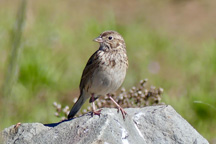
Come discover a glimpse of the natural history of our region. The focus will be Wings—critters that fly, pollinate, and twirl in the air. Topics include Bats with Wildlife Biologist Tony Kerwin; Dragonflies with local Naturalist and Dragonfly Expert Norm Barrett; Vesper Sparrows with Klamath Bird Observatory’s Research Biologist, Dr. Sarah Rockwell; and Bumble Bees with Naturalist and Southern Oregon Land Conservancy’s Stewardship Director, Kristi Mergenthaler.
Arrive early to secure a seat and to order food or drinks. This is an all-ages free community event.
Attention Oregon birders, I am pleased to announce a great community science opportunity in Oregon! Klamath Bird Observatory is partnering with Intermountain Bird Observatory to carry out the Western Asio Flammeus Landscape Study (WAfLS). This community science project, now spanning eight western states, is designed to gather information to better evaluate the population status of the Short-eared Owl. Traditional survey data have indicated that Short-eared Owl populations have declined by more than 60% in the last 40 years. The Oregon Conservation Strategy has identified the Short-eared Owl as a Species of Greatest Conservation Need and the National Audubon Society Climate Initiative has identified the species as Climate Endangered. This survey is a critical step to filling information gaps for this species in Oregon. Results will directly influence high-value conservation actions by state and federal agencies. We are looking to recruit a set of dedicated volunteers to help complete this state-wide survey.
Volunteers will enjoy rural Oregon at twilight while completing two road-based surveys during late winter and early spring. The surveys consist of driving on secondary roads, stopping at 8 to 11 points to complete a five-minute survey. At each point volunteers will record detections of Short-eared Owl as well as some brief habitat information. The entire survey is completed within 90 minutes. Training material will be provided and no experience is necessary to volunteer. Participants will need to follow field and data entry protocols, have use of a vehicle, smartphone or GPS device, and be able to identify a Short-eared Owl.
Named after the abundance of camas
lilies dotting the meadow blue through the long days of June, Lily Glen offers
a fine sight that comes alive in the summer. This May-July, my field partner
and I spent our days here with the purpose of locating and monitoring the nests
of a local population of Oregon Vesper Sparrows. Our goal was to collect data
on nest success for a range-wide study attempting to determine causes of
declines in this at-risk subspecies unique to the Pacific Northwest. Tracking
these birds took more patience than I had ever imagined, and we made slow
progress finding the nests one by one. And I swear, the Vesper Sparrow is a particularly
fickle little bird who is unsurpassed in misleading humans in the whereabouts
of their nests!
Each day would start before dawn with
a quick breakfast and lots of coffee to keep us attentive during the cold, slow
mornings. The meadow was broken up into four general sections that Jen (the
other field technician), sometimes Sarah (KBO staff biologist), and I would
rotate through, following leads from previous attempts. Male Vesper Sparrows
were quite consistent in their behavior, singing in their territory all morning
and foraging on the ground with their female companion. Females were also
fairly consistent in their behavior, which mostly consisted of foraging with or
without their male companions, and hiding from us, nowhere to be found. We
would crouch, sit, lay down, stand, roll, and crawl to try to keep the birds
visible in the dense grass while remaining far enough away for them to go about
their business.
Most nests this year were found by
food carries to the nestlings. Both the male and female assist with this duty
once the eggs have hatched, and the nestlings grow rapidly until they leave the
nest around ten days later. A handful of nests were found by following a female
who was observed carrying nesting material repeatedly to a general location.
This method, although common with other birds when locating nests, was
particularly difficult with our Vespers as they like to land on the ground some
meters away from the nest and then walk or run the remaining distance
undetected through thick grass. Additionally, we had a few “luck” finds, in
which a nest was found by unintentionally flushing a female off the nest while
walking through the meadow.
The most rewarding part of this job
was after weeks of following the progress of a nest from creation to egg laying
to hatching to fledging, seeing a little family of Vesper Sparrows exploring
new lengths of the meadow together, learning the ropes of being a bird in the
free world. Really, when it comes down to it, being a nest searcher means
simply not giving up. There were many days when I, the least experienced of the
field crew, after a half hour or so of attentively watching a female would give
up and think “she’s not doing anything but eating.” Yet as Sarah would always
remind me, you just need to be patient and wait for the birds to give you a
clue.
Our Vesper Sparrows have now all migrated south
to spend the winter across pasture lands full of seeds and ground spared by
snow. I know that we are all excited to see their return to Lily Glen next
spring – and with the identifying color bands applied to dozens of individuals
over the past two seasons, it will be a pleasure to see which birds return for
another spring in the mountain meadows outside of Ashland.
Editor’s note: The Oregon Vesper Sparrow population is estimated to be <3,000 individuals. Along with researchers in the Willamette and Umpqua Valleys, OR, and the Puget Lowlands, WA, we are studying their nest success, survival rates, and habitat associations. Our goal is to find out how to target conservation actions to halt and reverse their population decline. The 2019 field season was supported by the Oregon Wildlife Foundation, Charlotte Martin, and the Management Studies Support Program for National Conservation Lands.
For a second year, the Rogue Valley Messenger has included Klamath Bird Observatory in their annual Give Guide — a listing of local nonprofits, each of which is doing important work to make the world of southern Oregon a better place. The Give Guide includes basic information about 17 different groups that the Messenger is encouraging our community to learn more about and give to!
KBO has also been invited to the Messenger’s annual Giving Tuesday event tonight (Tuesday, December 3) from 5 to 8 pm, at ScienceWorks in Ashland. As part of a larger national Giving Tuesday trend, this in-person meet, greet, and give event in the only one of its kind in southern Oregon. Come join us and our colleagues from other local non-profits to celebrate in-person the good work we are all doing.
At Lincoln School: 320 Beach Street, Ashland, Oregon 97520
This CONSERVATION CELEBRATION offers both gently-used and new bird-related gifts: Books, art, ceramics, jewelry, hats, t-shirts, games, and other gifts.
OR HOW ABOUT GIVING THE GIFT OF CONSERVATION IN THE FORM OF A DONATION TO KBO AS YOUR HOLIDAY GIFT. GIFT CARDS WILL BE AVAILABLE FOR THIS GIVING GESTURE.
If you have a bird-related gift to donate, want to volunteer to provide baked goods, or help with the event, please contact Shannon Rio at shannonrio@aol.com.


 WESTERN HUMMINGBIRD PARTNERSHIP, BOULDER, CO [June 11, 2020] – From a hummingbird’s point of view, wildfire can be good or bad. Seven hummingbird species are widespread in the western United States and beyond, including the Calliope Hummingbird, the smallest North American species, and the Rufous Hummingbird, which holds the long-distance flight record.