Tiny Bird, Epic Journey: Introducing KBO’s 2026–2027 Conservation Science Stamp
Put your stamp on conservation
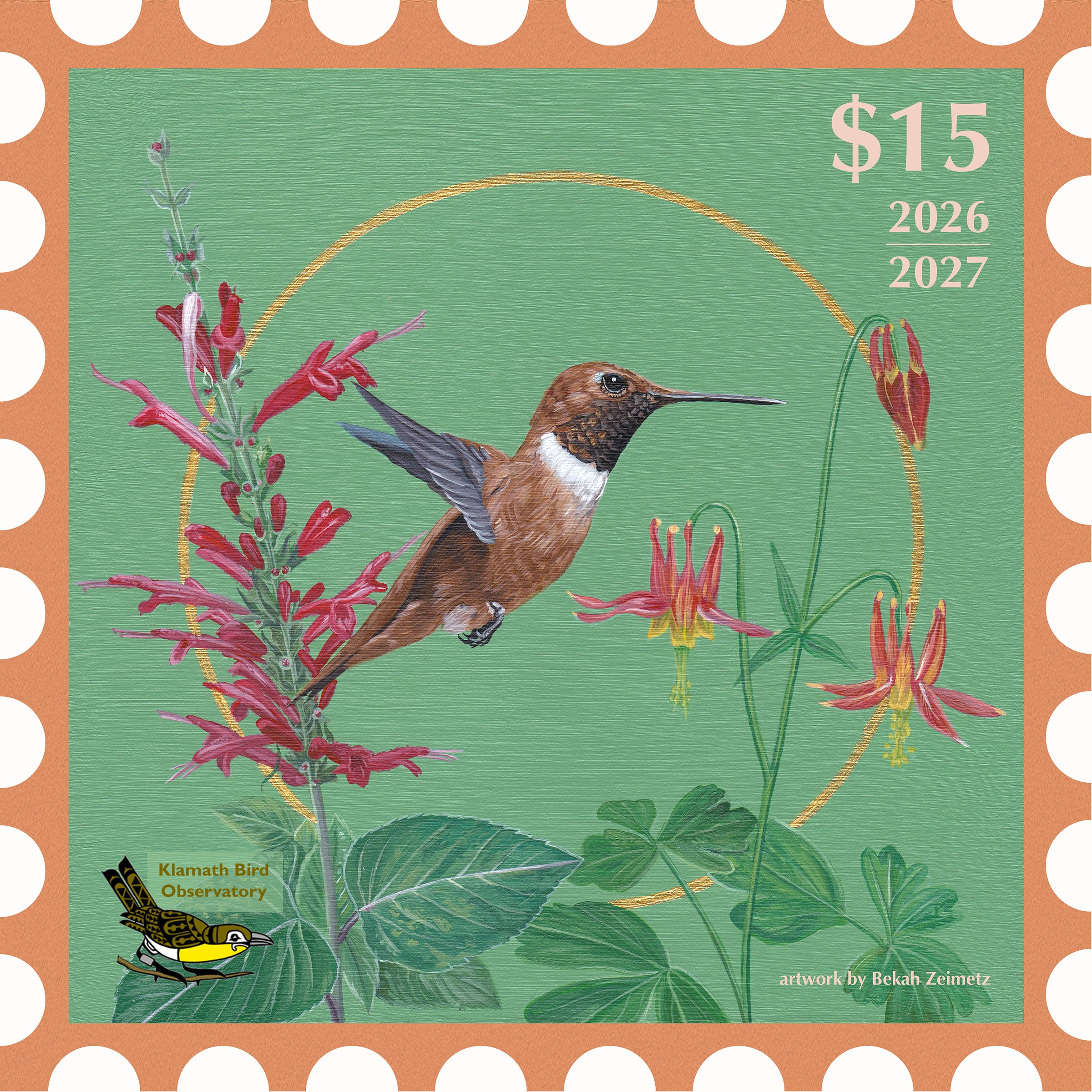
Klamath Bird Observatory’s 2026–2027 Conservation Science Stamp celebrates the Rufous Hummingbird, one of the West’s most remarkable migratory pollinators and a powerful symbol of connected habitat conservation.
Tiny but mighty, Rufous Hummingbirds weigh less than a nickel and can travel thousands of miles between breeding areas in the Pacific Northwest, Canada, and Alaska, and wintering areas in Mexico and the southeastern United States. Their annual journey depends on native flowers, insects, forests, meadows, riparian areas, post-fire landscapes, and safe migration stopovers across western North America.
This year’s stamp is more than a collectible piece of wildlife art. It is a way to support the science, education, and partnerships needed to protect birds and the habitats they depend on throughout their full annual life cycle.
Every purchase supports KBO’s mission to advance bird and habitat conservation through science, education, and partnerships.
Federal Duck Stamp
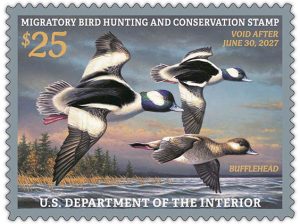
By funding habitat protection across our National Wildlife Refuges, the Federal Duck Stamp has long shown what’s possible when people unite for wildlife. At Klamath Bird Observatory, we’re building on that legacy with our Conservation Science Stamp that highlights science-based efforts to protect habitats for all bird species. When you purchase the Conservation Stamp Set, you’re joining birders, hunters, and conservationists who believe in preserving birds and their habitats.
Why this bird, why now
Rufous Hummingbirds are small, fierce, and unforgettable, but they are also declining. Long-term monitoring shows steep population losses, and conservation scientists have identified the species as one of the West’s most imperiled hummingbirds.
Their story is urgent because their survival depends on many places at many times of year. A Rufous Hummingbird may need early-blooming flowers during spring migration, forest openings and nesting habitat during the breeding season, high-elevation meadows during southward migration, and pine-oak forests and flowering plants on the wintering grounds.
When any part of that chain is weakened by habitat loss, climate change, pesticide exposure, invasive plants, overgrazing, altered fire regimes, or loss of native flowers, the effects can ripple across the entire annual cycle.
KBO’s Conservation Science Stamp helps turn concern into action by supporting research, monitoring, decision-support tools, education, and partnerships for birds and habitats.
Rufous Hummingbirds show why conservation must be connected across landscapes and seasons.
Their migration is not one simple path. In spring, Rufous Hummingbirds generally move north along the Pacific Coast toward breeding areas in the northwestern United States, Canada, and Alaska. In late summer and early fall, many return south through the Rocky Mountains before reaching wintering areas in Mexico. Research also shows that migration patterns differ by age and sex, with adult males, adult females, and young birds using different timing and routes. Use the Audubon Explorer tool to learn more about Rufous Hummingbird migration.
That means conservation must provide resources for all birds across the full annual cycle: breeding, migration, molt, wintering, and return migration.
KBO and partners are working to understand where Rufous Hummingbirds go, what resources they need, and where conservation action can make the greatest difference.
Rufous Hummingbirds are closely tied to dynamic western landscapes.
Post-disturbance and post-fire habitats can provide important resources for hummingbirds, especially when fires or forest openings support abundant wildflowers. During post-breeding migration, Rufous Hummingbirds may rely on high-elevation meadows and recently disturbed areas where late-blooming nectar-producing flowers are available.
Healthy forests are not static. Western forest bird conservation depends on restoring resilience, supporting natural patterns of disturbance and succession, reducing the risk of uncharacteristically severe wildfire, and improving habitat conditions for birds and people.
KBO’s conservation science helps inform active forest management.
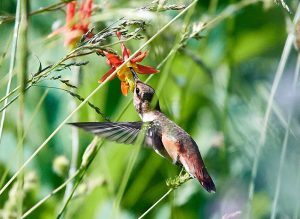
Rufous Hummingbirds are pollinators that depend on flowers throughout the year.
They feed on nectar from many native plants and may visit thousands of flowers in a single day. Insects are also essential, especially for growing chicks and during molt, when birds need protein and nutrients that nectar alone cannot provide.
One of the clearest “no regrets” conservation actions is to increase the abundance and diversity of native, locally adapted flowers. Native flowering plants support hummingbirds, bees, butterflies, and other pollinators while strengthening the habitats birds need during migration, breeding, and winter.
KBO’s work
KBO has helped build the scientific foundation for western hummingbird conservation.
Through the Western Hummingbird Partnership, Avian Knowledge Network, decision-support resources, and collaborative research, KBO works with partners to identify conservation needs, fill information gaps, guide land management, and support full-life-cycle conservation for Rufous Hummingbirds and other western birds.
This stamp supports KBO’s role as a science-based conservation leader: connecting research to action, helping land managers make informed decisions, and engaging communities in bird and habitat conservation.
Bird conservation and community well-being are connected.
Healthy western forests support birds, clean water, climate resilience, fire-adapted landscapes, and the communities that depend on them. KBO’s work helps align conservation science with active forest management, restoration planning, decision-support tools, and community-based partnerships. By supporting the Conservation Science Stamp, you help sustain the science and partnerships that benefit birds, habitats, watersheds, and people.
Purchase your stamp today!
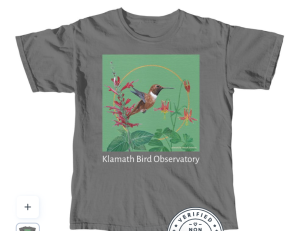
Too many stickers? No problem! You can also choose this beautiful design on a t-shirt, available in multiple colors and sizes, including youth options. Purchase your t-shirt here.
Artist: Bekah Zeimetz
 Bekah Zeimetz is a self-taught acrylic painter based in Eugene, Oregon. She gathers inspiration and reference photos from countless hours spent hiking and birdwatching in the Pacific Northwest. Using vibrant color and thousands of small marks, she turns these experiences into beautiful paintings to remind the viewer that magic still exists.
Website: https://www.bekahzeimetz.com/