Upper Klamath Lake Banding Station Visit
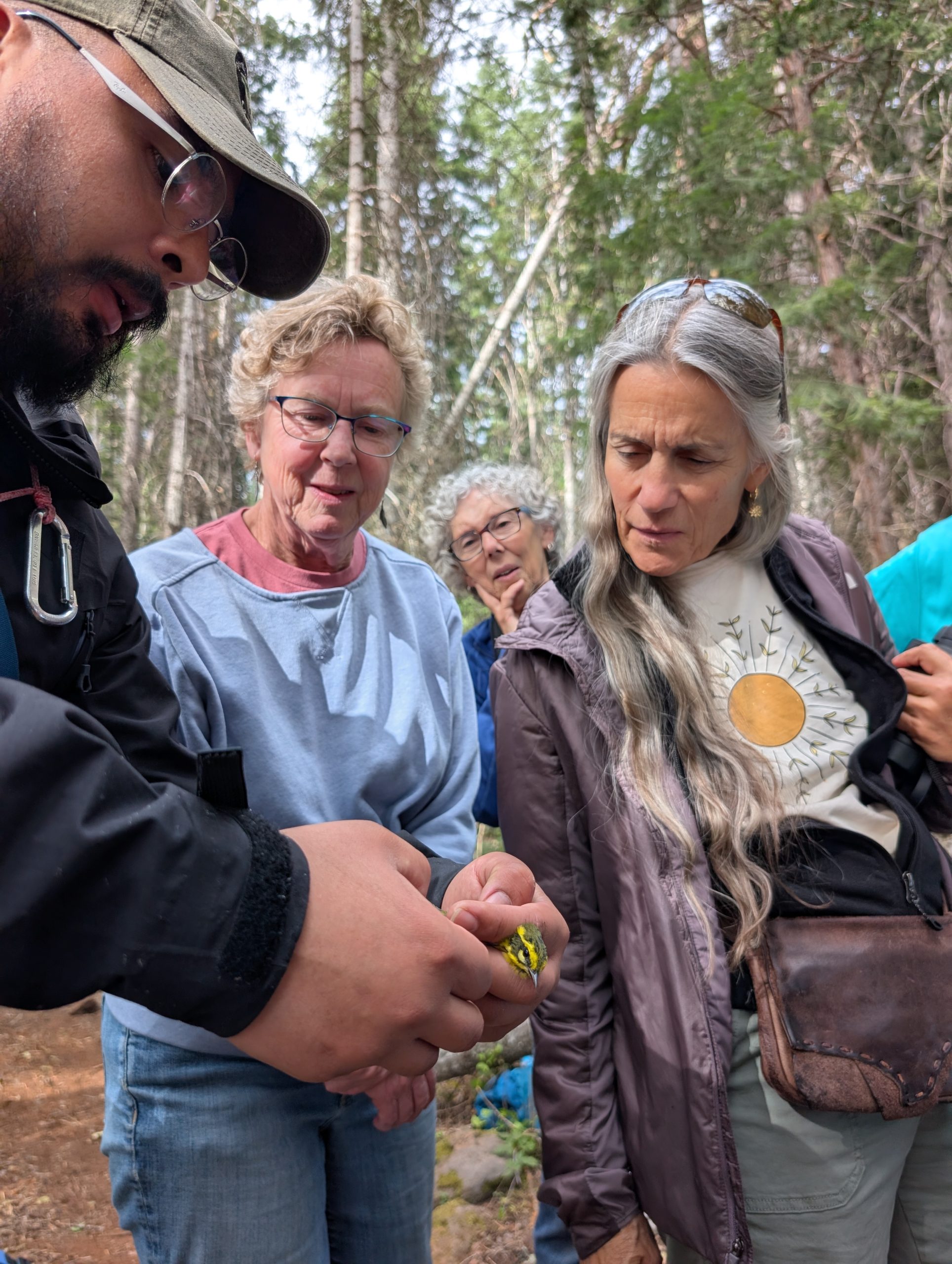
?!?! These were my sentiments during my most recent visit to the Upper Klamath Lake banding station. The exclamation marks express my pure delight to see, up close, the precious, black-buttoned, bright-eyed, brilliantly yellow, diminutive avian friends’ faces, which I wanted to kiss. The question marks symbolized how mystified I felt watching the numerous indistinguishable birds, and how stupefied I was, marveling at the banders’ skill in discriminating the often-unrecognizable specimens to be inspected, especially since this was a hatch year (HY) for, seemingly, the majority. The recent fledglings stumped my novice birding skills, considering their missing distinguishing coloration, bands, bars, etc., to which even the knowledgeable banders required returning to their tabbed pages in their Peter Pyle Identification Guide to North American Birds, or laminated diagrams of feathers, cranial development (a.k.a. cranial pneumatization), all of which they had already dedicated thousands of hours poring over. However, as a consolation prize for my failed earnest identification attempts, one species that I confidently and happily identified was a Wilson’s Warbler, donning his black toupee!
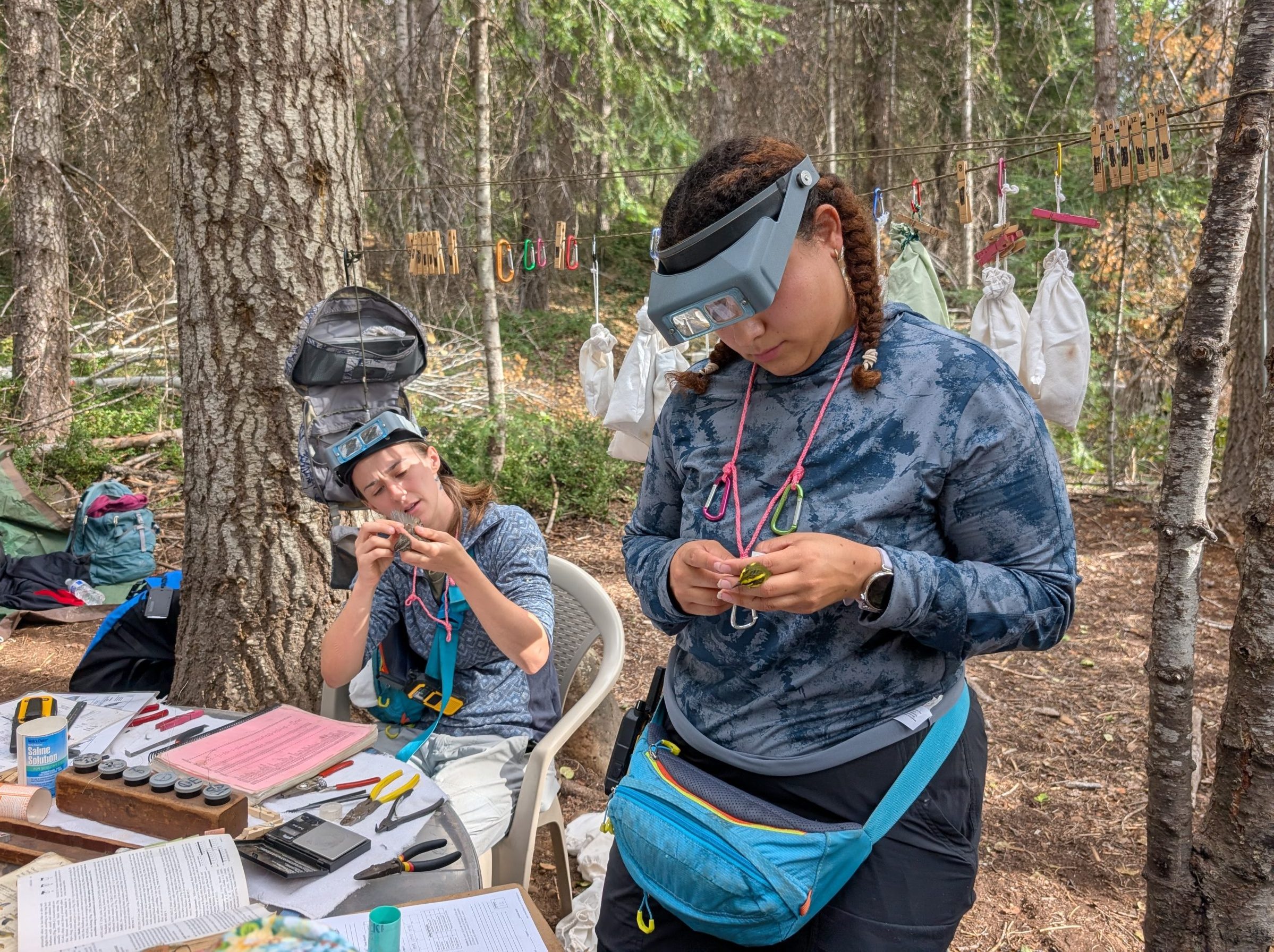
With the start of Fall migration, the banders experienced a huge influx of birds to examine, and one of the most frequent was the Hermit Warbler, a species I wasn’t even aware of. Unwittingly, and even a bit arrogantly, I kept thinking that those referring to the warbler were in error, since I only knew of the Hermit Thrush. What a surprising and joyful revelation it was to me when I finally looked it up on the Cornell Lab “All About Birds” website! Another new species for me to learn about! I threw off and away the horse blinders! Another species that I had been introduced to during the recent field day, but had seen in a few bird identification books, was the MacGillivray’s Warbler, fondly referred to by the banding crew as the “Mac and Cheese”. I initially thought that it was a juvenile Common Yellowthroat, with the commencement of a distinct black line through the lores, but stopping at the eyes, and not through them to create the full mask.
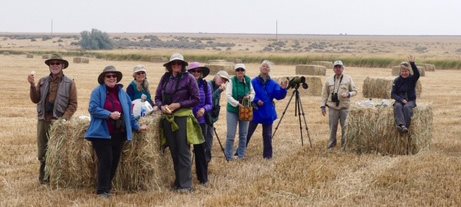
In closing, the beautiful sights at the banding station extend the ride. There is no clear stopping point or border to these rich, breathtaking, awe-inspiring sights. The expansive, majestic mountains, open fields, and trees are part of our community, and we humans are not mere observers but members; our awareness and conscientious choices in our interactions within the web of life can positively impact it.