
Tag: Klamath Bird Observatory

Beaver Fever: From pests to restoration tools

Bird survey location at a post-assisted woody structure (PAWS) site on the Scott River, CA. Beavers have added chewed stems to the structure, visible in the lower part of the photo. (c)  Scott River Watershed Council 2015
Beavers, like humans, are engineers of their own habitats, carrying out construction projects that make more food resources and housing available to them. Recently, beavers have been recognized by land managers as playing a vital role in maintaining diverse stream and riparian habitats. The benefits of beaver impoundments in a watershed include slowing and spreading the flow of water, improving water retention and groundwater recharge, increasing base flows, and lengthening the time in summer when above-ground flows are present. Given that climate change is expected to increase drought and reduce snow pack, water storage from beaver dams may be an effective way to help offset decreased water resources. Beaver dams can also expand the size and complexity of wetlands, providing important habitat for birds, fish, aquatic invertebrates, mammals, and amphibians. Ironically, after decades of trapping and removing ‘pest’ beavers, they are now understood to be a keystone species vital to the health of the land. Beavers have been successfully reintroduced to public and private lands in Washington and Utah to control erosion, capture water during droughts, and improve salmon fisheries.

This fall, KBO entered into a new partnership project with the Scott River Watershed Council near Etna, CA, to monitor ecological changes resulting from the creation of PAWS (post-assisted woody structures) — PAWS are built by people to mimic the beneficial effects of beaver dams. KBO is monitoring changes in bird abundance and diversity at PAWS sites to assess the success of these restoration efforts. Past studies of beavers in New York and Arizona show that active beaver sites, and all of their associated habitat complexity, support more species of birds than sites without beavers. Our partners at the Scott River Watershed Council are also monitoring the effects of PAWS on water quality and quantity, and are ensuring that the short, permeable structures are not barriers to fish passage.

So, why not just “leave it to the beavers?” Actually, not all beavers build dams. Some dig bank burrows into the earthen sides of a waterbody or river channel to create their lodges, particularly on deep lakes, larger rivers, and in places where water flows are too fast to build stable dams. Many beavers observed in the Scott River Valley seem to fall into this category of “bankies”. However, permeable wood structures with water flowing through have been known to be too tempting for beavers to resist. The rushing water can actually trigger dam-building behavior, so the area’s resident beavers may soon be helping humans restore streams in the Scott River valley!

PhD position, Migration and Wintering Ecology of Riparian Birds

Yellow-breasted Chat with a new geolocator (c) KBO 2015
Co-supervisors: Dr. Karen Hodges, University of British Columbia Okanagan, and Dr. Christine Bishop, Environment Canada.

Collaborators: Dr. Keith Hobson, Environment Canada, Klamath Bird Observatory, San Pancho Bird Observatory, Tierra de Aves A.C., MX

Many riparian birds in Canada occur at the northern edge of their range. There is little understanding of the overwintering locations, return rates, and survivorship of these birds relative to those in the core of their range. This research will primarily examine the range-wide patterns in overwintering locations and the factors that influence migration trends in riparian birds that nest in the dry interior of British Columbia (BC) and in Northern California.

This PhD position is designed as a comparative study of populations of two focal species, Gray Catbird, and Yellow-breasted Chat (endangered in BC). The student will use geolocator data, stable isotopes, corticosterone, and mercury analyses in collaboration with Mexican partners to identify overwintering locations, travel corridors, and stressors affecting these populations.

Preferred Qualifications: We are seeking a student with an MSc in ecology, biology, conservation, or related disciplines. We will look favorably on research experience with birds, including practical skills in bird banding and handling and identification. The successful applicant will have strong grades, likely with peer-reviewed journal publications, and GIS and statistical skills. We expect the successful applicant will also apply for graduate fellowships.

We ask all interested applicants to submit a cover letter, informal transcripts, and a CV to Dr. Hodges for initial screening (for full consideration, submit materials before December 15). Highly qualified candidates will be encouraged to apply formally to UBC Okanagan’s Biology Graduate Program for September 2016 admission; we strongly hope the student will be able to begin fieldwork in May 2016.

For questions about the position please contact:

Dr. Karen Hodges, karen.hodges@ubc.ca

For information about the Biology Graduate Program at UBC Okanagan:

http://biol.ok.ubc.ca/graduate/biologyprogram.html

Seeking to Fill Positions: Bird Monitoring Student Volunteer Internships on the Trinity River

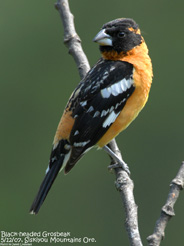
Black-headed Grosbeak (c) Jim Livaudais 2015
Klamath Bird Observatory (www.klamathbird.org) will fill up to five student volunteer internship positions on the Trinity River in northern California. You do not need to be enrolled as a student to apply for this position, however, this student internship is designed to offer an academic learning opportunity. The student volunteer interns will participate in the bird monitoring component of a large restoration project on the Trinity River in northern California from ~April 11 – August 1. This is a fantastic opportunity to gain exposure to an array of ornithological field methods while working on a high profile restoration project in a beautiful part of the world.

EXPECTATIONS: Primary duties are nest searching/monitoring, spot map surveys, re-sighting color-banded birds, target netting and color banding riparian passerine focal species, and vegetation surveys. Additional duties include completing paperwork, entering data, maintaining equipment and housing, participating in riverine float surveys, and other tasks as required. Field training in protocol methodology, bird ID, and orienteering with compass and GPS will be provided early in the field season.

QUALIFICATIONS: All applicants should demonstrate a strong interest in birds, natural history, and field biology, and should be prepared to work long days in the field in hot and inclement weather, follow prescribed protocols, be meticulous in collecting and recording data, be in good physical condition, work well both independently and with others, possess good communication skills, and have a valid Driver’s License; ability to drive a manual vehicle is preferred but not required. Applicants must be willing to work in areas of poison oak, Himalayan blackberry, and biting insects, with the potential to encounter rattlesnakes, black bears, and cougars. It is essential that the applicant be comfortable and capable of working independently both at remote sites and in areas where interaction with the public is likely. Preference will be given to those with previous experience in ornithological field methods and orienteering. Two of the five intern positions require proficiency at banding small passerine birds, and preferably experience with color-banding. The three additional intern positions do not require banding experience, however those interns will have the opportunity to assist in target netting efforts.

COMPENSATION: These are volunteer intern positions, with a monthly stipend of $750 for reimbursement of living expenses, plus field housing in the Weaverville area, provided. Binoculars will be available if needed. We will provide field vehicles, but some personal vehicle use may occasionally be required. If so, you will be reimbursed for per-mile transportation costs.

APPLICATION: Send cover letter (including dates of availability and whether you have a personal vehicle), résumé, and contact information for three references, preferably by email, to Ellie Armstrong (eea@klamathbird.org). Applicants will be reviewed until the positions are filled.

Ashland: Where Ya At?

Want to learn more about your local bioregion? Enjoy delicious local food and drinks? Don’t miss this fun and educational happy hour Wednesday night at the Standing Stone Brewing Co. in Ashland.

Ashland: Where Ya At? brings you five fast pace presentations including Klamath Bird Observatory’s Executive Director John Alexander who will be speaking about forest bird.

The event will take place Wednesday November 18th from 5-6pm and is a free community event hosted by the Southern Oregon Land Conservancy.

Flier_ashlandwhereuat_1115_jpeg (1)

For the Birds: Immense Possibilities is Rebroadcasting an Episode Featuring Klamath Bird Observatory

If you missed your first opportunity or would like a chance to see it again, this week Immense Possibilities will be rebroadcasting the episode For the Birds featuring Klamath Bird Observatory’s Executive Director John Alexander and Science Director Jaime Stephens.

Watch this episode:

 Friday November 20th, 2015 at 8:30pm Pacific Time on SOPTV or streaming at the IP Homepage,

Saturday November 21st, 2015 at 8:30am Pacific Time on OPB Plus or,

Saturday November 21st, 2015 at 4:00pm on KIXE-TV.

You can also find the full episode on a previous Klamath Call Note blog post.


Geolocators used to link breeding and wintering populations of Prothonotary Warblers

***NEWS RELEASE-FOR IMMEDIATE RELEASE***

November 13, 2015

Contact: Jared Wolfe jdw@klamathbird.org

Prothonotary Warbler (c) Jim Livaudais 2015

ARCATA, Calif. — Prothonotary Warblers are stunningly beautiful and highly migratory birds closely tied to their preferred breeding habitat: swamps and other forested wetlands in the eastern United States. Scientists have noted that Prothonotary Warbler populations have experienced precipitous declines in recent years, prompting new research investigating the little known migratory behavior of this remarkable bird. As part of this effort, researchers from the U.S. Forest Service Pacific Southwest Research Station, Klamath Bird Observatory, Louisiana Bird Observatory, and Audubon Louisiana attached several geolocators—ultra-lightweight devices that record the time of sunrise and sunset each day—using a back-pack harness on several Prothonotary Warblers to identify their migratory routes and core wintering areas. The information collected by each geolocator was used to estimate the daily longitude and latitude of the bird.

“As part of this study, we deployed three geolocators on Prothonotary Warblers in Louisiana,” says Jared Wolfe, lead author and postdoctoral researcher with the Pacific Southwest Research Station and Klamath Bird Observatory. “After the breeding season, at least one individual completed its fall migration, over-wintered and made its way back to Louisiana where the bird was recaptured and the geolocator was retrieved.”

Data from the geolocator suggest that this bird traveled at least 5,000 miles through seven countries.

Researchers found that this Prothonatory Warbler’s migration pattern included an initial flight over the Gulf of Mexico from Louisiana into Central America, then east to the Greater Antilles for about one month, followed by a flight over the Caribbean Sea south to northwest Columbia where it remained for the duration of the winter. These findings contribute to a growing body of evidence that many migratory birds often use two or more wintering locations, or exhibit prolonged stopover behavior.

“Our results are the first to document movements of Prothonotary Warblers during their migratory and over-wintering periods,” says Erik Johnson, co-author of the study and director of bird conservation at Audubon Louisiana. “Based on the success of this study, we formed a coalition that includes researchers from Virginia Commonwealth University and Audubon South Carolina where we deployed an additional 47 geolocators on Prothonotary Warblers in 2014.”

By increasing the breadth of the study, the team of scientists hopes to better understand the migratory and over-wintering behavior of Prothonotary Warblers to identify core areas of habitat that may require additional protection for the species. This study also demonstrates that geolocators can be safely used to document migratory connectivity of species of conservation concern.

The findings of this study were published in the September 2015 issue of the Journal of Field Ornithology. To read or download the publication, go to http://www.treesearch.fs.fed.us/pubs/49289.

Click here for a PDF of this press release.

Click here for press packet with a PDF and a high resolution image.

#################

Klamath Bird Observatory, based in Ashland, Oregon, is a scientific non-profit organization that achieves bird conservation in the Pacific Northwest and throughout the migratory ranges of the birds of our region. Headquartered in Albany, California., the Pacific Southwest Research Station develops and communicates science needed to sustain forest ecosystems and other benefits to society. It has research facilities in California, Hawaii and the U.S.-affiliated Pacific Islands.
This news release adapted from US Forest Service June 10, 2015 Press Release.

Free Publication Informs Oak Habitat Conservation on Private Lands

*** NEWS RELEASE — FOR IMMEDIATE RELEASE ***

October 12, 2015

Contact: Jaime Stephens, jlh@klamathbird.org, (541) 944-2890 or
John Alexander, jda@klamathbird.org, (541) 890-7076

Oak Guide on Private Lands Cover Image (72ppi 5x6)

A document authored by Klamath Bird Observatory and Lomakatsi Restoration Project provides guidance for private landowners interested in implementing oak habitat restoration on their land. The document, entitled Restoring Oak Habitats in Southern Oregon and Northern California: A Guide for Private Landowners, emerged from a collaborative project involving a suite of private and public conservation partners, including the Bureau of Land Management (Medford District), US Fish and Wildlife Service’s Partners for Fish and Wildlife Program, Natural Resources Conservation Service, Klamath Basin Audubon Society, Oregon State University, American Bird Conservancy, and Klamath Siskiyou Oak Network.

Historically oaks were widespread throughout the valleys and foothills of Oregon and California. However, the arrival of Europeans to the region in the mid-1800s marked the beginning of a period of decline for oak habitats and their associated wildlife. Many oak woodlands were converted for agricultural uses or urban development, and decades of fire suppression during the latter half of the 20th century has allowed less fire-resistant yet faster growing tree species, such as Douglas-fir, to encroach upon and displace oaks. Now, the majority of remaining oak habitats occur on private lands. Private landowners are thus presented with an opportunity to restore healthy, wildlife-rich oak ecosystems to the landscape and thereby leave a valuable legacy for future generations.

The new landowner guide focuses on conservation practices for Oregon white oak and California black oak habitats. The document begins with an overview of the importance and history of oak habitats and then provides life history information for the oak species of the region. The guide next provides detailed oak restoration guidelines for achieving desired conditions in oak stands, such as diverse habitat structures, large oak trees, and the presence of snags, downed wood native shrubs and perennial grasses. The guide also includes supplemental resources for private landowners, including a list of organizations that will assist with private lands restoration as well as step-by-step instructions for monitoring birds to track the return of native wildlife following oak restoration activities.

This accessible, attractive, and informative guide is available for free download on the Klamath Bird Observatory website (click here). Funding for this project came from the Medford District of the Bureau of Land Management, a Toyota TogetherGreen grant managed by Klamath Basin Audubon Society, and the Rural Schools and Community Development Act.

######################

Klamath Bird Observatory, based in Ashland, Oregon,  is a scientific non-profit organization that achieves bird conservation in the Pacific Northwest and throughout the migratory ranges of the birds of our region. We developed our award-winning conservation model in the ruggedly beautiful and wildlife-rich Klamath-Siskiyou Bioregion of southern Oregon and northern California, and we now apply this model more broadly to care for our shared birds throughout their annual cycles. Emphasizing high caliber science and the role of birds as indicators of the health of the land, we specialize in cost-effective bird monitoring and research projects that improve natural resource management. Also, recognizing that conservation occurs across many fronts, we nurture a conservation ethic in our communities through our outreach and educational programs.

Winter Talks and Walks

Bohemian Waxwing January 2013 (c) Frank Lospalluto
The Klamath Bird Observatory’s popular Talks and Walks series is back with new opportunities to expand your knowledge of birds seen throughout the Klamath-Siskiyou Bioregion. These Talks will be held on the first Thursday of the month at KBO’s headquarters: 320 Beach Street, Ashland, OR 97520 with the Walks followed on Saturday. To sign up, contact KBO board member Shannon Rio at SHANNONRIO@aol.com and send participation fee of $25 to Shannon Rio at 610 Iowa Street Ashland, Oregon 97520. Space is limited so sign up soon!

WINTER BIRDS

  • Taught by Harry Fuller, KBO Board President.
  • Classroom session: Thursday, November 5th, 2015 6:30-8:00pm at KBO headquarters, Lincoln School.
  • Field trip: Saturday, November 7th, 2015 all day with time of departure to be announced at the talk.
  • In Jackson County some of our resident birds come down from the mountains, like Juncos, Wilsons Snipe, Hermit Thrush, Pacific Wrens and an occasional Townsend Solitaire. An influx of ducks and other birds arrive from colder climes. Some of our birds simply stay put but have to change their diet significantly. Phoebes do not find much call for fly-catching in a real winter. This class will explore our winter birds and see if we have some surprises due to climate change.
  • Space is limited to 15.

    HAWK IDENTIFICATION WORKSHOP

    • Taught by Dick Ashford, local hawk expert and KBO Board Emeritus
    • Classroom session: Thursday, Dec 3, 2015 6:30 – 8:30pm at KBO headquarters, Lincoln School
    • Field trip: Saturday Dec 5, 2015 8am til 5pm-ish; Butte Valley, the Klamath Basin and environs
  • This always-popular workshop returns for another year! During the classroom session, Dick will provide a straightforward introduction to the identification of our local hawks, eagles, and falcons. The goal? To prepare you to be successful (and have fun!) on the Saturday outing. Prerequisites: Fun people only – no whiners!
  • Space is limited to 14.
  • KBO’s Post-doctoral Fellow Awarded Young Professional Award


    Photo of Jared Wolfe

    Klamath Bird Observatory is proud to announce that Jared Wolfe, KBO’s Post-doctoral Fellow, was awarded the prestigious Cooper Ornithological Society’s 2015 Young Professional Award. The recognition was awarded to Jared based on his track record of producing meaningful science focused on the impacts of climate and habitat change on tropical and temperate birds. In addition to his science, Jared was recognized for his contributions to conservation and capacity building by co-founding the Louisiana Bird Observatory and teaching bird banding and statistical courses throughout Africa, and North, Central and South America. As the 2015 Young Professional Award recipient, Jared delivered a plenary address during the Cooper Ornithological Society’s and American Ornithologists Union’s 2015 meeting this past July. Jared’s plenary discussed his ongoing research into the ecological value of second growth and forest fragments for bird communities in Amazonian and Congolese forests where bird species within the same ecological guilds respond to habitat disturbance in similar ways irrespective of their evolutionary relatedness. In addition to his ongoing research in the tropics, Jared is currently working with KBO and the US Forest Service examining how bird communities on public lands in Oregon and California are responding to an increasingly volatile climate.

    To read the full announcement click here.

    Burns and Birds: What’s Left After Fire

    Landscape after the Quartz fire (c) KBO archives

    Jaime Stephens, Klamath Bird Observatory Science Director, was recently interviewed on the Jefferson Exchange. She shared results from a recently published study that found fire severity and the number of years post fire were both critical to unveiling potential benefits for birds. You can listen to the full Jefferson Exchange broadcast online by clicking here.  To learn more about this study an d the results found click here and read the full press release or view the full paper published in The Condor: Ornithological Applications.