***News Release: December 12, 2017***
Contact: Sarah Rockwell, Research Biologist, Klamath Bird Observatory, 541-201-0866, smr@klamathbird.org
Birds Teach Scientists How to Improve Streamside Restoration
Ashland, OR—Restoring river health in the western United States is important for addressing drought and water quality issues in support of restoring endangered salmon populations, but it is often challenging to understand how best to restore wildlife habitat along stream banks. A new study by a team of researchers from Klamath Bird Observatory (KBO), in partnership with the Trinity River Restoration Program (TRRP), sheds light on how best to understand the success of river restoration efforts: follow the birds.
Researchers studied a series of sites along the Trinity River in northern California for four years to figure out how best to restore vegetation along streambanks following river restoration. Creating new side channels and lowering the floodplain next to streams is good for fish spawning and rearing, but creating more salmon habitat sometimes requires a bulldozer. Removing lush, dense bank vegetation in the process may seem like bad news for birds, but the TRRP replants portions of the riverside with native trees and shrubs, and the birds come back. Still, it is important to monitor the newly created floodplains to ensure they are providing good habitat for wildlife – just in case this human assistance isn’t working the way we expect it to. The research team found that there are ways to plan river restoration and replant vegetation that encourage the birds to return, which can help improve restoration projects in the future.

To learn how birds respond to restoration, scientists studied four key bird species that are common in riverside habitats (Black-headed Grosbeak, Song Sparrow, Yellow-breasted Chat, and Yellow Warbler) at a set of sites that have undergone restoration by the TRRP and a set of sites that were left as remnant mature forest. Birds are good indicators of healthy, functioning ecosystems, in part because they have a diverse range of habitat needs and respond quickly to changes in their environment. The authors compared vegetation on the recently restored sites to the remnant mature forest, and monitored which vegetation features were preferentially used by birds. Birds in the study overall chose to use areas with features of mature forest that were less abundant on new floodplains in the early stages of revegetation (planted just 3-10 years ago). Birds used the newly restored sites too, particularly the remnant patches of undisturbed habitat on those sites. Looking at where birds choose to raise their young reveals why: birds generally placed their territories and/or nests in areas with more canopy cover, taller trees, greater tree species diversity, and multiple layers of vegetation at different heights – all habitat features that may take decades to develop on restored areas. Knowing that these habitat features are important helps land managers recreate the best quality habitat for terrestrial wildlife and informs restoration planning. For example, future projects may benefit birds by leaving patches of mature vegetation within or near restoration sites whenever possible.
One result was unexpected. “We were really interested in the fact that Yellow-breasted Chats and Yellow Warblers frequently placed their territories or nests in areas with more Himalayan blackberry,” says Dr. Sarah Rockwell, KBO Research Biologist and lead author of the study. “Himalayan blackberry is a non-native, invasive shrub that land managers spend a lot of time and money removing – an important restoration practice – but the removal may have unintended consequences for birds.” She suggests that replanting with similarly structured native shrubs may be important in order to provide good nesting habitat for these birds following restoration.
Click here to view the abstract of Habitat selection of riparian birds at restoration sites along the Trinity River, California. Published in Restoration Ecology (Early View online) DOI: 10.1111/rec.12624.
Click here to download a zipped press package: News Release – Birds Teach Scientists
Click here to download a PDF of this news release: News Release – Birds Teach Scientists How to Improve Streamside Restoration
###
About Klamath Bird Observatory:
Klamath Bird Observatory advances bird and habitat conservation through science, education, and partnerships. We achieve bird conservation in the Pacific Northwest and throughout the migratory ranges of birds native to our region. We developed our award-winning conservation model in the ruggedly beautiful and wildlife-rich Klamath-Siskiyou Bioregion of southern Oregon and northern California. Emphasizing high-caliber science and the role of birds as indicators of the health of the land, we specialize in cost-effective bird monitoring and research projects that improve natural resource management. Also, recognizing that conservation occurs across many fronts, we nurture a conservation ethic in our communities through our outreach and educational programs. Visit Klamath Bird Observatory at www.klamathbird.org.
About Trinity River Restoration Program:
Created by a Record of Decision from Congress in 2000, the TRRP is an inter-agency partnership (including National Marine Fisheries Service, U.S. Fish and Wildlife Service, U.S. Forest Service, Bureau of Reclamation, California Natural Resources Agency, Hoopa Valley Tribe, Yurok Tribe, and Trinity County) with funding from Bureau of Reclamation appropriations, Central Valley Project Improvement Act funds, and U.S. Fish and Wildlife Service funds. Its creation was motivated by drastic declines in salmonid fish populations observed in the Trinity River since the installation of two dams in the early 1960s, which slowed and stabilized the river flow, causing changes in the shape of the river channel and hydrology that were detrimental to salmonids. The TRRP is tasked with returning salmon fisheries to pre-dam levels by restoring the river’s physical processes – through techniques such as watershed restoration, managed flows, channel rehabilitation including construction of floodplain habitat scaled to restoration flow levels, gravel augmentation, and addition of large woody debris. These efforts are managed by the Trinity Management Council Partners, and advised by the Trinity Adaptive Management Working Group and a Science Advisory Board. Visit TRRP at www.trrp.net.

 The tallest bird in Oregon, the Sandhill Crane comes from an ancient lineage that may be among the earliest warm-blooded animals still found on earth. How do they live? We will explore the mechanics of their amazing trumpeting calls. We’ll discuss where they nest in Jackson County and other parts of the western U.S. and where you can see them in winter and early spring.
 To sign up, contact Shannon Rio at
  All the complicated details
 We have reduced prices for many items at our Online Store. Hats, t-shirts, and more …


 Cydne and husband, Mike, arrived in Ashland in 2003 from Menlo Park, California. She retired in 2009 after a 35 year career as a Technical writer and editor, followed by four years as a part-time copy editor at Blackstone Audio. She first volunteered with the Mountain Bird festival, and soon thereafter had the good fortune to discover KBO’s wonderful “talk and walk” community education classes. She became a member in 2011.


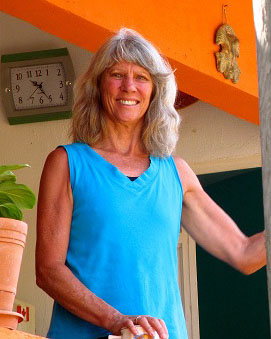 Each time I step outside into nature, especially wild places, I am grateful. Golden-crowned and White-crowned sparrows herald the season with their fall arrival. As I wander through higher-elevation pine forests or the oak woodland around the valley, I am filled with awe and deep appreciation for the miracle of trees. Western Screech-Owls sing a nighttime sound. The day brings bird calls and young birds singing some fragment of the song that they will belt out when next spring arrives. Being outside is a gift, one that I want to preserve, cherish, protect, and pass on in its fullness to the next generation. I look to ways to give back to nature.