Author: KBO

Klamath Siskiyou Oak Network to Host Oak Woodland Restoration Field Day

<img class="size-full wp-image-2850" src="https://klamathbird.org/wp-content/uploads/2015/06/Acorn-Woodpecker-c-2015-Livaudais-72dpi-3xX.jpg" alt="Acorn Woodpecker (c) 2015 Jim Livaudais" width="216" height="288" title=" Acorn Woodpecker
(c) 2015 Jim Livaudais” />

*** PRESS RELEASE — For Immediate Release ***

On June 27, 2015 the Klamath Siskiyou Oak Network (KSON) will host an Oak Woodland Restoration Field Day, designed to provide an opportunity for landowners and land managers to learn about oak restoration on their lands. This half-day event will be held at several properties in the Colestin Valley between Ashland and Yreka, where a large-scale private lands oak conservation partnership program has been underway for the past decade. A series of presentations by restoration professionals, agency managers, wildlife biologists, and private landowners will highlight current oak restoration and management approaches, the habitat value of oaks for birds and other native wildlife, and how landowners can access technical resources and funding for restoration.

The KSON partnership conserves oak habitats on private and public lands in the Klamath-Siskiyou Bioregion of southern Oregon and northern California. KSON partners include non-governmental organizations, local state and federal agencies, Native American tribes, and private citizens. The Oak Woodland Restoration Field Day represents an important part of KSON’S goal to promote oak conservation and restoration by providing opportunities for practitioners and community members to engage on issues affecting threatened oak habitats. KSON members from Lomakatsi Restoration Project, Klamath Bird Observatory, Bureau of Land Management, Natural Resource Conservation Service, US Fish and Wildlife Service, and US Forest Service will be present to offer their unique perspectives on oak restoration. This event will be an excellent opportunity for landowners and managers to meet others who share an interest in habitat conservation and restoration of oak savannas and woodlands, and to discuss the best ways to preserve these precious natural resources into the future.

The Field Day is free, but space is limited and registration is required. This event is planned for 8:30 am to 2:30 pm, and participants will need to provide their own lunch. For more information, including registration and carpool information from Ashland or Yreka, or for more information about KSON, please contact KSON Coordinator Kate Halstead at 541-201-0866 ext 7#, or at keh@klamathbird.org.

INFORMATION CONTACT:
Kate Halstead, Biologist & KSON Coordinator
Klamath Bird Observatory
keh@klamathbird.org
541-201-0866, ext 7#

Click here to view pdf of this press release.

Click here to view event flyer.

Click here to download print quality image of Acorn Woodpecker (c) 2015 Jim Livaudais.

##########

Additional Conservation Plans

Klamath Bird Observatory, in collaboration with many partners has developed strategic bird and habitat conservation plans and other technical publications that are detailed and information-rich. These plans represent the collective efforts of numerous individuals from multiple agencies and organizations to provide bird and habitat conservation and management guidelines.

Continue reading

Announcing the Spring Birds of Malheur Trip

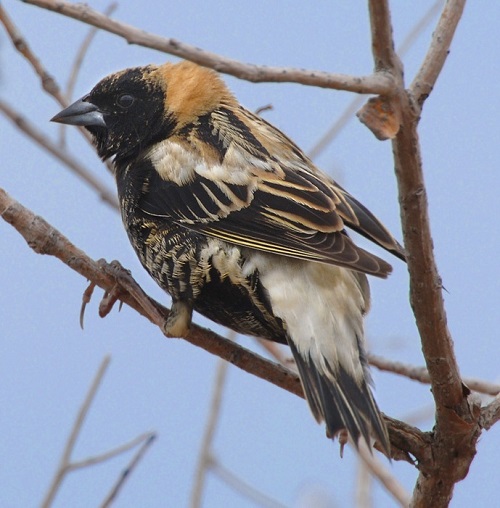
Bobolink. Photo (C) Jim Livaudais.

June 5th – 8th, 2015

Join professional birding guide and KBO board president Harry Fuller for a trip to the Malheur National Wildlife Refuge, a world-renowned birding destination and the largest wetland in eastern Oregon.

This Klamath Bird Observatory conservation outing is truly an unforgettable trip. The area provides important breeding grounds for Sandhill Crane, Swainson’s and Ferruginous Hawk, and Prairie Falcon, and participants should also see Bobolinks, Sage Sparrows, and Eastern Kingbirds, among dozens of other bird species. This special conservation outing is limited to 10 participants. Register soon before spaces fill. Click here to download the full trip flyer.

Cost
$500 (includes lodging, one evening bird presentation, two dinners, three breakfasts, & $300 tax-deductible donation in support of Klamath Bird Observatory’s bird and habitat conservation programs)

Transportation
Carpooling in four vehicles, gas costs shared among participants.

Food
Bring lunches, snacks, drinks, and a potluck dinner dish. Three breakfasts and two dinners are included.

To Register
Email Kaitlin for details at <kac AT klamathbird.org>, or call Kaitlin at (541) 201-0866 ext. 5#

Your Support Makes a Difference
Klamath Bird Observatory takes pride in conservation leadership and our internationally recognized conservation model. In our fundraising outings we combine a celebration of birds with the commitment needed to ensure their continued survival. Your participation in these outings not only puts you in touch with incredible displays of nature; it also makes a positive contribution to bird and habitat conservation. We are tremendously grateful for your support.

Webinar: Avian Conservation Science Tools for Strategic Forest Planning

webinar_titlepageThis summer, the US Forest Service invited Klamath Bird Observatory’s Executive Director John Alexander to present a webinar in the agency’s Seminar Series Innovations in Science and Technology for Monitoring, Assessment, and Inventory Efforts. This series focused on innovative techniques that inspire “outside the box” thinking for effective, cost-efficient, and multi-purpose methods to achieve Forest Service goals related to inventory, monitoring, and assessment of natural resources. John’s webinar presentation was entitled, Avian Conservation Science Tools for Strategic Forest Planning: A New Multi-species Approach to Using Focal Species to Inform Us on Forest Condition.

Click here to visit the Innovations Seminar Series website, where you will find recordings of all the webinars in the series, including John Alexander’s webinar which is the third one listed.

Cydne Jensen

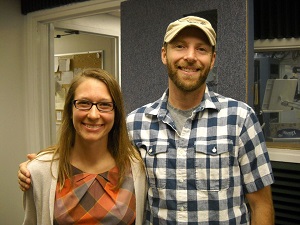
Cydne and husband, Mike, arrived in Ashland in 2003 from Menlo Park, California. She retired in 2009 after a 35 year career as a Technical writer and editor, followed by four years as a part-time copy editor at Blackstone Audio. She first volunteered with the Mountain Bird festival, and soon thereafter had the good fortune to discover KBO’s wonderful “talk and walk” community education classes. She became a member in 2011.
Continue reading

Autumn Presentations by KBO Board Members

Two Klamath Bird Observatory Board Members, Shannon Rio and Dick Ashford, are giving informative and engaging presentations on birds this autumn in partnership with North Mountain Park and Ashland Parks and Recreation. Learn more about these exciting talks below.

October 15th: Beautiful Birds, Beautiful Words

Klamath Bird Observatory Board Member Shannon Rio combines bird photography with poetry, myth, and lore in this presentation that celebrates nature, literature, and our connection to words. 

Details: Wednesday October 15th from 6:30-8:00pm, Ages 10-Adult, event at North Mountain Park Nature Center, and cost is $10. Pre-register online at www.ashland.or.us/register or call the Nature Center at 541-488-6606.

November 4th, 11th, and 18th: Hawks!

Dick Ashford, former Klamath Bird Observatory President and KBO Honorary Board Member, gives this three-part Powerpoint presentation on hawks – those fascinating creatures that capture our imaginations as few other bird groups do. Easily seen (but tough to identify), hawks push our primal poetic buttons. This popular course will examine the natural history of diurnal raptors – what makes a hawk a hawk, anyhow? We will also investigate hawks’ relationship with humans throughout history. This is NOT an ID class but, at the end of this course, you are guaranteed to be a dedicated hawk enthusiast! 

Details:  This three-part series is held on the Tuesdays of November 4th, 11th, and 18th from 7:00-8:30pm; Ages 11-Adult; event at North Mountain Park Nature Center; and cost is $25 for the series. Pre-register online at www.ashland.or.us/register or call the Nature Center at 541-488-6606.

Help Save Migratory Birds with a Donation Today!

Migratory birds connect us all. As these remarkable travelers navigate migration routes throughout the globe, they connect people across countries, cultures, and even hemispheres.

Alarmingly, many migratory birds are in decline, a clear signal of the worsening health of the ecological systems that support life on earth. Western forest birds have declined 20% over the past 46 years. Many well-known birds that inhabit the Pacific Northwest are in steep decline, including Black Tern, Common Nighthawk, Bank Swallow, Horned Lark, and Varied Thrush.

In order to start to reverse these declines, Klamath Bird Observatory has launched an online crowdfunding campaign with the goal of raising $18,800 in 60 days. These funds will help us continue to build a dedicated community of conservationists who apply KBO’s successful, science-based model throughout the world.

Your donation will provide an early-career conservation science intern with living stipend, housing, equipment and learning tools, mentor support, and transportation during the field season.  Please contribute, in any amount, to this important program today!

Through your generosity, we can continue to strengthen the safety net for migratory birds. Together, we can keep aloft the miraculous migratory birds that delight us, inspire us, connect us together, and serve as an accurate measure of the health of our land, air, and waters.

A History of Success

Klamath Bird Observatory’s illustrious training program has graduated over 170 bird monitoring interns from 18 different countries, including Argentina, Australia, Belize, Brazil, Canada, Colombia, Costa Rica, Ethiopia, Holland, Hungary, Jamaica, Mexico, New Zealand, Peru, Spain, Trinidad & Tobago, United Kingdom, and the United States. Our trainees include both early-career interns and those coming to KBO with significant life experience.  Many of these individuals have gone on to develop conservation capacity in areas where it is needed most, and/or achieve advanced degrees in biology, ecology, and conservation. For example:

  • Luis Morales of Mexico interned with Klamath Bird Observatory in 2012. At that time he was laying the foundation for a new bird observatory in his native San Pancho, Nayarit, located on the Pacific coast of Mexico. The San Pancho Bird Observatory is now a healthy and growing organization advancing bird conservation and education in western Mexico, where many of our nesting songbirds spend their winters.
  • Mauricio Lewis and Diego Garcia of Peru, and Andres Henao and Miguel Moreno of Colombia, all became certified by the North America Banding Council as expert bird banders and banding trainers during their KBO internships. Each of them now sponsors and participates in training workshops held throughout Mexico and Central and South America, reaching dozens of new students and potential conservationists each year.
  • Carl Fitzjames, a community leader from Brasso Secco in Trinidad and Tobago, participated in the KBO internship program and then returned to his home as one of the few certified bird banders in his country. Carl now works with the University of the West Indies and others to support applied research studies being implemented by professors and graduate students. Such studies are increasing the awareness and protection of wetlands that are important for resident and migratory birds. Carl has also worked with the US Embassy to present education programs for small communities and school groups.

These former Klamath Bird Observatory student-interns embody the leadership qualities of our interns and demonstrate the sustained and far-reaching influence of KBO’s international capacity building and training programs.

Please help us strengthen this essential conservation training program with a donation today!  Contribute to our Indiegogo crowd-funding campaign by clicking here.

Also, Please Help Us Spread the Word

Please help us spread the word about this campaign by sharing this blog with your friends, family, and colleagues through social media and direct eMail. Thanks for your commitment to birds and our beautiful planet!

KBO Speaks to Public Radio about Status of Birds in USA

September 9th, 2014

stephens_breenKlamath Bird Observatory staff members were interviewed this morning on Jefferson Public Radio’s news and information program the Jefferson Exchange about the status and health of bird populations in the United States. The interview followed closely on the heels of the release earlier today of the 2014 State of the Birds report: the most comprehensive examination of long-term trend data for birds in the USA ever.

The annual US State of the Birds report is produced by the North American Bird Conservation Initiative. Klamath Bird Observatory is a long-time contributor to these influential and high profile reports, starting with the initial report published in 2009.

KBO Executive Director John Alexander attended the report’s official release event at the Smithsonian Castle in Washington D.C., and was reached via cellular phone for the radio interview, whereas KBO Science Director Jaime Stephens and Science Communications & Outreach Officer Brandon Breen joined the program’s host Geoffrey Riley at the JPR Studio in Ashland, Oregon.

Two key messages from the report were discussed during the interview: first, many bird populations have experienced significant declines in the United States, and second, conservation works where investments are made. The release of the 2014 State of the Birds report also coincides with the 100th anniversary of the extinction of the Passenger Pigeon. The story of the Passenger Pigeon is a cautionary tale that reminds us of how easily our natural heritage can slip away without due diligence and a commitment to conservation: both rescuing threatened species and working proactively to keep common birds common.

During the interview, KBO staff also noted that an arsenal of scientific data and tools exist that can be used to inform conservation priorities and actions. Unfortunately, the science that exists is not being used to its full advantage. The inclusion of bird monitoring and bird conservation into large-scaled management planning will help western forest bird conservation while also helping land managers better implement forest restoration priorities.

Click here to listen to the full radio interview on the Jefferson Public Radio website.