Author: KBO

Overcoming Social and Scientific Challenges to Inform Management in the Cascade-Siskiyou National Monument

In 2000, Klamath Bird Observatory incorporated, emerging from nearly 10 years of coordinated inventory and monitoring efforts in the Klamath-Siskiyou Bioregion of southern Oregon and northern California.  In that same year President Clinton issued a proclamation that established the Cascade-Siskiyou National Monument, protecting 52,000 acres referred to as “an ecological wonder” and “a biological crossroads—the interface of the Cascade, Klamath, and Siskiyou ecoregions, in an area of unique geology, biology, climate, and topography.”  These lands are representative of the biodiversity for which the larger area we had been studying is widely recognized.  The proclamation called for management in the Monument that ensures continued ecological integrity for the area.  It was this ecological integrity that our research, using birds as indicators, was designed to measure.  In fact, we had collected a lot of data in the area of the Monument documenting the biodiversity of birds, a group of animals identified in the proclamation as one of the many “objects of biological interest” to be protected in the Cascade-Siskiyou National Monument.

In 2000, Klamath Bird Observatory’s non-advocacy, science-based model was new to the region and we were well-positioned to facilitate what was escalating into a controversial issue.  The Presidential Proclamation called for a livestock grazing impacts study, stating that, “should grazing be found incompatible with protecting the objects of biological interest, the Secretary [of Interior] shall retire the grazing allotments [within the Monument].”  This resulted in a tense atmosphere among stakeholders including the ranchers who had grazed livestock in the area for decades, an environmental community focused on reducing the negative impacts of grazing, and the Bureau of Land Management (BLM), a government agency typically charged with multiple-use natural resource management but now tasked with coordinating a complicated scientific study and protecting an area for conservation purposes.

Soon after the proclamation was issued, Klamath Bird Observatory began working with all the stakeholders to design and implement a grazing effects study in the Monument.  We were faced with both social and scientific challenges that put our new non-advocacy, science-based model to the test.  At first, the environmental community voiced concerns about KBO working with the BLM on the study, showing their distrust of the agency.  Expressing similar skepticism, many of the ranchers were concerned that we were working with the non-government environmental community on aspects of the study.  All parties were concerned that individual partners or funding sources would introduce bias into our results.  In addition to these social issues, designing a grazing impacts study in the Monument represented a significant scientific challenge because the majority of the area had been grazed for many decades, leaving us with no ungrazed habitats to use as “controls” against which grazing effects could be compared.

We quickly realized that our non-advocacy, science-based model could be used to turn these challenges into opportunities for success.  The study design would require cooperation from all stakeholders; we would need to conduct extensive vegetation surveys to document a subtle gradient representing less grazed to more heavily grazed sites.  We took on a leading role in this aspect of the study, viewing its design and implementation as essential to effectively measuring the effects of grazing on the Monument’s objects of biological interest.  We also viewed collaboration on the study design as a way to unify both the agency and NGO partners involved in the broader grazing effects study.

Within this context we helped to facilitate a process whereby a team of agency, academic, and NGO scientists collaborated on a transparent set of study designs that were presented for scientific review as well as review by a Resource Advisory Committee representing the diverse stakeholder interests.  At a Resource Advisory Committee meeting it was agreed that this peer-reviewed and transparent study, and the peer-reviewed results, would produce an agreed upon body of science that would support the upcoming decisions on grazing that had been called for in the Presidential Proclamation.  This elevated the science above the social controversy and distrust, in recognition of the integrity of the scientific process.  The stage was set for a management decision to be informed by one of the most comprehensive grazing effects studies ever conducted in the western United States.

Many of the study results did indicate that maintaining the current grazing rate and conserving the ecological integrity required by the Monument’s objects of biological interest would prove to be a challenge for the Bureau of Land Management.  For example, our data suggested that reduced grazing would benefit long-distance migrant, foliage gleaning, and shrub-nesting birds in the Monument’s oak woodland habitats, meeting established bird conservation objectives.

During the time that the Monument was being created, and the study was being designed and implemented, a separate negotiation involving the government and the environmental and grazing communities was underway.  These groups were seeking legislation to facilitate third-party compensation for ranchers who would donate their grazing leases in the Monument, allowing their allotments to be permanently eliminated.  This financial compensation offered an alternative to the Presidential Proclamation that stated, “should grazing be found incompatible with protecting the objects of biological interest, the Secretary shall retire the grazing allotments.”  However, it was not until the study results were published that a compensation price point could be agreed upon.  The results made the retiring of the allotments more likely, given the Secretary’s obligation to meet the directives of the proclamation.

Our early involvement with the Cascade-Siskiyou National Monument grazing study served as an excellent test of our non-advocacy, science-based model, and proved to be a true success story for Klamath Bird Observatory, for science, and for science-based bird conservation.  Our non-advocacy, science-based model served as a means for building bridges among adversaries, who were eventually able to collaborate as part of a transparent and effective scientific process.  Through our involvement we solidified many long-lasting partnerships with diverse collaborators including the Bureau of Land Management, Geos Institute (formally a local office of the World Wildlife Fund), Oregon State University, the US Geological Services Co-op Unit, and local landowners and ranchers.  Additionally, many acres of habitat in the Cascade-Siskiyou National Monument are no longer grazed by livestock, a change in management that is benefitting the ecological integrity of the Monument and many of the resident and migratory birds that depend on its oak woodland habitats.

Karl Schneck bio (72ppi 4x)

Karl Schneck

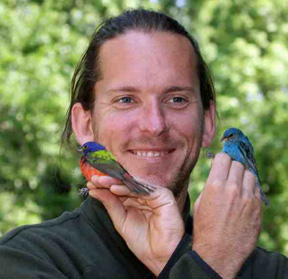
Karl Schneck bio (72ppi 4x)Karl started birding at 11 years old in Santa Rosa, California, birding for three years with two of California’s greatest birders as mentors, Gordon Bolander and Mike Parmeter. Karl then got distracted for over 50 years, busy with college, dental school, and work. Karl restarted in 2014 with the Ashland Christmas Bird Count and he can’t believe he ever stopped. Now Karl is loving it more than ever
Continue reading

Jared Wolfe bio (72ppi 4x)

Jared Wolfe, PhD

MICHIGAN TECHNOLOGICAL UNIVERSITY and US FOREST SERVICE
Jared Wolfe bio (72ppi 4x)KBO Research Associate Dr. Jared Wolfe received his BS and MS from Humboldt State University. He completed his Ph.D. at Louisiana State University studying landscape demography of Amazonian birds. Dr. Wolfe is a science advisor for Costa Rica Bird Observatories, co-founder of the Louisiana Bird Observatory, North American Banding Council (NABC) certified trainer, and current NABC board member serving as a trainer-at-large, and a permitted master bander in the USA and Brazil. He regularly coordinates bird monitoring and statistical workshops in the USA, Costa Rica, Peru, and Brazil. Dr. Wolfe is an Assistant Professor at Michigan Tech University.

Continue reading

zARCHIVE Andrew Wiegardt

Andrew Wiegardt, Biotechnician

Andrew is currently an undergraduate student studying wildlife biology at Humboldt State University. He is interested in effective methods of conservation and restoration. Integrating research, education, and in situ conservation methods is critical to preserving the natural world. Andrew hopes to better understand the ecological interactions so he can apply sustainable conservation strategies at a larger scale.

KBO Internship Program Selected by Obama Administration, Puts Young People to Work on Public Lands

2013_trinity_internsAs part of the Obama Administration’s ambitious youth initiative to inspire millions of young adults to play, learn, serve, and work in the great outdoors and the President’s 21st Century Conservation Service Corps Initiative, Secretary of the Interior Sally Jewell today announced $6.7 million in grants to support conservation employment and mentoring opportunities at 43 projects on public lands across the country. The 21st Century Conservation Service Corps is a national collaborative effort to put America’s youth and returning veterans to work protecting, restoring, and enhancing America’s great outdoors.

With funding from the Bureau of Land Management, US Fish and Wildlife Service, National Park service, and US Forest Service, Klamath Bird Observatory (KBO) will build on a long-standing partnership with the agencies to expand its internship program and improve outreach to underserved communities, including Native American, Hispanic, and other underserved youth.  The combination of KBO’s established long-term monitoring program and an intensive training curriculum foster the integration of youth engagement and professional training.  Program expansion will create four six-month internship positions.

KBO Interns are provided with a robust opportunity to gain a realistic appreciation of what a field biologist position entails as part of their training and practical experience.  The internship program establishes a working atmosphere of respect and collaboration with intern engagement with staff and Board members, a series of day‐long extracurricular seminars, and KBO social events. Interns also learn how the data they collect are applied to address conservation priorities at regional, continental, and hemispheric scales. Klamath Bird Observatory’s project will be operated out of long-term field residences in the Upper Klamath Basin, OR, and will include activities at 10 monitoring sites in southern Oregon and northern California, and at KBO’s headquarters in Ashland, OR.

This project is being funded through the America’s Great Outdoors: Developing the Next Generation of Conservationists, a competitive grant matching program launched in conjunction with the National Fish and Wildlife Foundation. Through the America’s Great Outdoors program, a total of $1.9 million in federal funds is being granted to 43 projects country-wide, and is being leveraged into the $6.7 million to support youth across the country.

Klamath Bird Observatory programs and partnerships exemplify public-private partnerships and meaningful educational and employment opportunities, and focus on public lands conservation which is at the core of the America’s Great Outdoors: Developing the Next Generation of Conservationists program.

We have a shared responsibility to protect and promote public lands that belong to all Americans so our children and their children can enjoy them for generations to come.  The 21st Century Conservation Service Corps is built through strong public-private partnerships that not only provide employment opportunities to young adults but also provide powerful connections to nature that will last a lifetime,” said Interior Secretary Sally Jewell.

The partnerships associated with developing the next generation of conservationists offer an opportunity to connect our young people to the great outdoors,” said USDA Secretary Tom Vilsack. “This program engages young people from diverse backgrounds, including underserved populations, and equips them with the knowledge and critical job skills they need to pursue careers in conservation and land management.

NFWF is proud to support this initiative in partnership with the Departments of Interior and Agriculture to provide hundreds of young people with the opportunity to get real world, boots in the mud experience with conservation jobs,” said Jeff Trandahl, Executive Director and CEO, NFWF. “Providing these additional resources is a huge win for youth, conservation, and the future of America’s great outdoors.

Klamath Bird Observatory is a scientific non-profit organization that achieves bird conservation in the Pacific Northwest and throughout the migratory ranges of the birds of our region. KBO developed an award-winning conservation model in the ruggedly beautiful and wildlife-rich Klamath-Siskiyou Bioregion of southern Oregon and northern California, and KBO now applies this model more broadly to care for our shared birds throughout their annual cycles. Emphasizing high caliber science and the role of birds as indicators of the health of the land, we specialize in cost-effective bird monitoring and research projects that improve natural resource management. Also, recognizing that conservation occurs across many fronts, we nurture a conservation ethic in our communities through our outreach and educational programs. We owe our success to committed donors, volunteers, staff, and conservation partners who demonstrate that each of us can contribute to a legacy of abundant bird populations and healthy land, air, and water.

Click here to access a PDF of this press release.

Celebrating Bird Conservation – Mountain Bird Festival


OfficialArtwork_2014MountainBirdFestival_GaryBloomfieldKlamath Bird Observatory, with funding from the City of Ashland and the Kinsman Foundation, and overwhelming support from a community of sponsors and volunteers, is gearing up to host our first Mountain Bird Festival.  Bird enthusiasts are signing up and so far the majority of registrants will be coming from outside the region to attend this unique celebration in Ashland, Oregon from May 30th to June 1st. We are hosting this festival within a  context of conservation.

Klamath Bird Observatory is currently serving on a national team of scientists and communications specialists working to produce annual State of the Birds reports. The reports link bird conservation to the fundamentals of sustainability. They recognize that bird populations, like the famous canary in the coal mine, serve as bellwethers of the health of whole ecosystems, and thus our economic and social well-being.

As the State of the Birds Team works on the upcoming report, which will provide an update on bird population trends in our country since the initial report five years ago, we reflect on the centennial commemoration of the Passenger Pigeon. Once North America’s most abundant bird, the Passenger Pigeon was driven to extinction 100 years ago. A lesson that emerges from this travesty is that we must use proactive approaches to natural resource management and excellent applied science to avoid such unnecessary losses in the future.

While the State of the Birds reports highlight many inspiring conservation success stories, such as the recovery of the Peregrine Falcon, and the effective management of migratory birds through the North American Waterfowl Management Plan, they also outline some alarming trends. For example, declines of western forest birds appear to be sharpening, a reflection of the forest management challenges facing local communities, economies, and ecosystems in the Pacific Northwest.

So, by placing a birding festival within a conservation context, we are balancing troubling news about declining bird populations with the optimism that science-based conservation can work. The Mountain Bird Festival celebrates how citizens and science can reverse bird population declines through strategic habitat conservation, an engaged citizenry, and stewardship for resilient ecosystems. During the festival, field trip goers will be exploring the Klamath Siskiyou Bioregion, an area renowned for its high diversity of western forest migratory birds. This is also an area where opportunities abound for improved conservation of these species.

By signing up for the Mountain Bird Festival, every registrant will be purchasing a Federal Migratory Bird Hunting and Conservation Stamp and thereby directly contributing to habitat protection within the National Wildlife Refuge System. Additionally with registration, every festival attendee will be purchasing a Mountain Bird Conservation Science Stamp, with proceeds supporting Klamath Bird Observatory’s scientific programs that are driving western forest bird conservation in the Klamath Siskiyou Bioregion and throughout the Pacific Northwest.

We hope you attend our inaugural Mountain Bird Festival and help us write a new conservation success story starring citizens, science, and mountain birds.

eBird Festivals

bb_at_ww_400px

Birding festivals are growing in popularity across the world, and, increasingly, these community events are becoming “eBird Festivals.” eBird is a real-time, online checklist program that has revolutionized the way that the birding community reports and accesses information about birds. eBird festivals use the eBird program to track the many birds seen on the field trips offered during these events that celebrate birds and birding.  eBird Festivals also provide outreach, promoting the use of eBird by helping festival attendees set up their own eBird accounts and providing information about the powerful data entry and exploration tools offered by eBird.  By integrating eBird within festival activities these eBird Festivals are building on a significant opportunity for the birding community to contribute to the science that drives conservation worldwide.

Two of the first birding festivals to adopt eBirding as part of their annual celebrations were the Winter Wings Festival, held in February in Klamath Falls, Oregon, and the Godwit Days Spring Migration Bird Festival held in April in Arcata, California.  These festivals first adopted eBirding as an integral part of their activities in 2008 in collaboration with Klamath Bird Observatory, who at that time created the regional eBird portal, Klamath-Siskiyou eBird. This portal celebrates the globally outstanding biodiversity of the Klamath-Siskiyou Bioregion of southern Oregon and northern California, and  provides stories on the extensive conservation science efforts that have been developed in the region through the Klamath Bird Monitoring Network. This eBird Portal will soon be transformed into eBird Northwest, which will serve a broader geographical area while also acting as the citizen science application of Avian Knowledge Northwest. Avian Knowledge Northwest is a regional node of the Avian Knowledge Network that provides information from comprehensive datasets on birds and the environment for scientists, natural resource managers, and other individuals interested in conservation and science in the northwestern United States.

Between 2008 and 2013, the Winter Wings Festival in southwest Oregon logged 309 checklists documenting 195 species into the regional Klamath-Siskiyou eBird portal.  During this same time period, the Godwit Days Festival in northwest California logged 449 checklists documenting 283 species. A new eBird Festival, the Mountain Bird Festival, will be hosted by Klamath Bird Observatory and held for the first time this spring in Ashland, Oregon. These festivals are nurturing citizen-driven conservation by promoting eBird among their festival attendees and by helping each attendee contribute to one of the largest and fastest growing biological data resources in existence, eBird.

eBird was launched in 2002 by the Cornell Lab of Ornithology and National Audubon Society.

Science Guides Private Lands Conservation

oak_foreground

This article is the seventh installment in the series Achieving Partners in Flight Strategic Goals and Objectives.


Klamath Bird Observatory is working with local restoration partners to integrate Partners in Flight priorities and objectives into private lands restoration programs.  The Central Umpqua Mid Klamath Oak Habitat Conservation Project, funded by the NRCS Cooperative Conservation Partnership Initiative (CCPI) and the US Fish and Wildlife Service Partners for Fish and Wildlife Program, is a landscape-scale effort to restore oak woodlands on private lands in southern Oregon and northern California.  As a part of this project 15 public and private partners leveraged over $3.8 million to restore 2,000 acres of Oregon white oak habitat.


Lomakatsi Restoration Project and Klamath Bird Observatory are using objectives from regional Partners in Flight (PIF) conservation plans to guide the restoration.  Habitat objectives for Oak Titmouse, Acorn Woodpecker, Black-throated Gray Warbler, and other oak woodland species are providing details for management prescriptions designed to create oak woodland habitat mosaics, restore native perennial grasses, and reintroduce natural fire regimes whenever possible.  Bird monitoring is being integrated into habitat monitoring efforts to assess the effectiveness of restoration based on PIF population objectives. This unique collaboration received the 2012 Department of Interior Partners in Conservation Award.


Download the Partners in Flight Conservation Brief for this project by clicking here. Also see the 2013 State of the Birds Report on Private Lands that highlighted this collaborative oak restoration project in the section on western forest conservation.

Science-based Tools for Ecosystem Conservation

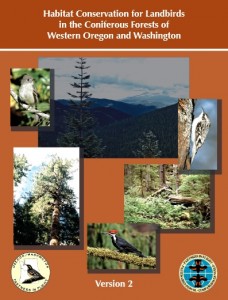
coniferous forests western or wa

This article is the sixth installment in the series Achieving Partners in Flight Strategic Goals and Objectives.

An important bird conservation goal is to integrate Partners in Flight priorities and objectives into public agency natural resource planning and action.  Partners in Flight uses a science-based method for bird conservation that incorporates a multi-species approach for assessing landbird vulnerabilities and needs, setting measurable conservation targets, describing management to meet these targets, and measuring the effectiveness of conservation actions. This approach can help land managers meet their ecosystem management needs. By aligning science, planning, and implementation among partners, we can more strategically implement actions that address priority science and habitat needs.

This strategic goal builds upon ten examples that illustrate both the process and science behind bird conservation throughout the western United States.  These examples were recently featured in Informing Ecosystem Management: Science and Process for Landbird Conservation in the Western United States, a Biological Technical Publication published by the US Fish and Wildlife Service.  The publication (1) describes how bird conservation and effectiveness monitoring can be integrated into land management guidelines with an emphasis on partnerships, and (2) presents case studies which highlight bird monitoring within the adaptive management framework.  The publication emphasizes both the science of monitoring and the process of its integration into land management because both are necessary in order for effectiveness monitoring to fully impact decision making.

Collaborating with national and regional partners, Klamath Bird Observatory is working toward better integrating the Partners in Flight approach within federal management planning and implementation.  At the 2012 annual meeting of the Association of Fish and Wildlife Agencies, we had an opportunity to present specific examples of how the tools developed by Partners in Flight can tie into natural resource management planning to an array of national resource management leaders.  We then teamed up with partners in Oregon and Washington to take the message on the road, presenting a traveling workshop that provided training to a wider audience on the use of Partners in Flight tools for assessing conservation needs, setting quantifiable management objectives, evaluating management alternatives, and monitoring management effectiveness.

We are now following up with regional partners to provide guidance on the process for identifying species that can serve as indicators of habitat and/or ecosystem condition at geographic scales appropriate for various land management and monitoring purposes.  We are working with Forest Service and Bureau of Land Management partners to develop projects that focus on using Partners in Flight’s conservation planning process in support of broad scaled and project level planning.  The recently published Habitat Conservation for Landbirds in Coniferous Forests of Western Oregon and Washington (Oregon-Washington Partners in Flight) is serving to guide these efforts.  This plan identifies 25 focal species that collectively represent the important habitat components of a functioning coniferous forest ecosystem.

Highlights from the Partners in Flight Conference

Partners in Flight logoBy John D. Alexander, Klamath Bird Observatory Executive Director

Klamath Bird Observatory took a leadership role last week at the 5th International Partners in Flight meeting in Snowbird, Utah.  This meeting involved a broad set of collaborators, including more than 225 conservation leaders from 120 federal, state, and non-governmental organizations and academic institutions representing 14 countries.  Participants worked together to develop continental-scale bird conservation business plans that are based on groups of migratory birds, the habitats where they occur throughout their life cycle, and the human communities that also depend on these habitats for their natural resource needs.

Klamath Bird Observatory’s John Alexander, Jaime Stephens, and Sarah Rockwell worked with partners to develop a conservation business plan for birds that breed in western forests and winter in high elevation pine-oak habitats and cloud forests in Mexico and Central America.  Through collaborative dialogue, a diverse set of high-priority conservation projects emerged. These projects focus on improving sustainable forest management and landscape conservation practices through the use of science-based bird conservation objectives. Importantly, these projects also give attention to the needs of local communities.

Here are some highlights that Jaime Stephens—Klamath Bird Observatory’s Science Director—shared from the meeting:

“It was extremely valuable to speak with new Mexican partners who work in the high elevation pine-oak habitats and cloud forests in Mexico where many of our Pacific Northwest breeding birds spend their winters. I gained a better understanding of the conservation challenges that exist south of the border, and we identified common opportunities to restore fire regimes and other natural processes that increase the resiliency of forested landscapes. These are important steps in achieving full life cycle conservation of our shared migratory birds.”